


There are voices that come from a place or a time, and then there are voices that define them. Big Noyd has always been the latter, a cornerstone of Queensbridge’s legacy, etched into the DNA of East Coast rap through his raw storytelling, unfiltered perspectives, and a presence that lived through it. From his early days alongside Mobb Deep to carving out his own lane, Noyd’s catalogue carries the weight of New York on his shoulders. While in London we caught up with him to discuss his history, style and a new album set to land this summer.
How did you first get into music?
Well, I have always been a fan of hip-hop. When I was younger, I used to write down lyrics from Rakim and Big Daddy Kane, just to make sure I had every word right when I was out there spitting their lyrics. That’s where it really started for me. I must’ve been around 15 or 16 at the time. I don’t remember the exact dates of when those albums dropped, but it was around then. I went from memorising other people’s lyrics to trying to write my own. I was doing talent shows at school and in the neighbourhood, grabbing the mic, doing a few bars, I always had that in me.

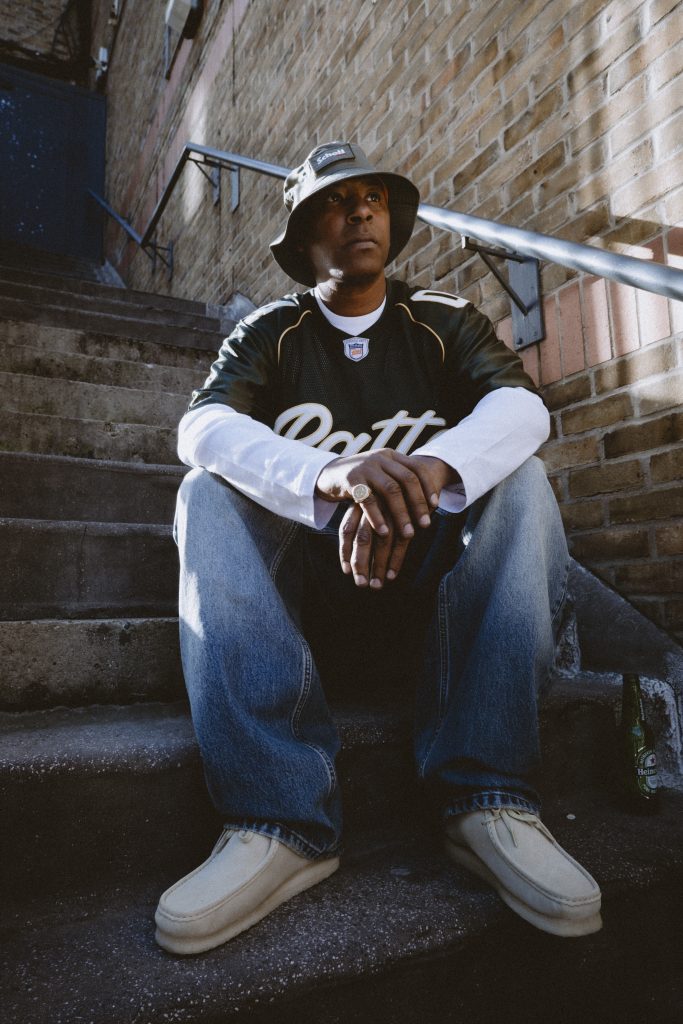

Top Patta, jeans Patta, shoes Clarks, hat Schott
You grew up with Havoc, tell us about that?
Before rap, I knew Havoc from around the way. In fact, I probably knew him better than some of the guys I actually grew up with, because our mums were really close. He’d come to my house like, “Yo, my mum’s here,” and I’d be like, “Yeah, she’s in the back.” Back then, even though we were young, we were still expected to look after things. We’d walk our mums through the projects to make sure they got where they needed to safely.
So we were always in and out of each other’s houses like that. I’d go to his, he’d come to mine, it was constant. I’ve known him since we were kids. What’s crazy is, we never even spoke about making music together back then. That only really came later, when everything started happening professionally with Mobb Deep and the 4th & Broadway deal.
We didn’t really move in the same circles like that. When we were outside, we weren’t hanging together. I’m originally from the 40th side of Vernon, that’s Nas’ block, so I knew Nas as a rapper. I didn’t hang out with him musically, though. I used to be around his younger brother, Jungle. Back then, Saturdays were simple, we’d watch Spider-Man and Friends, then the karate shows. After that, we’d run outside and start play-fighting, doing karate moves in the dirt. That’s how I first remember, Nas and Jungle… just on some kid stuff.
I built my own crew. We’d write and practice together. One of my friends’ dads played guitar, so they had equipment at the house, that became our little hub. I didn’t know Havoc was rapping like that or involved with Pain Gang. I just knew him as family. His mum made the best mac and cheese, he loved my mum’s fried chicken, that was the relationship. The music all came later.
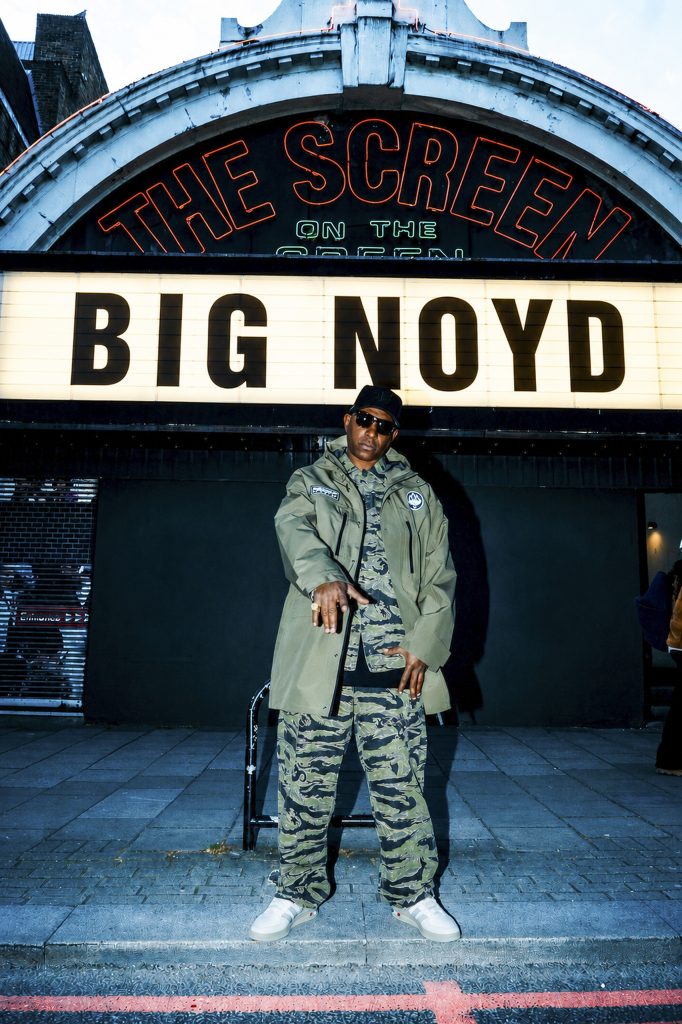
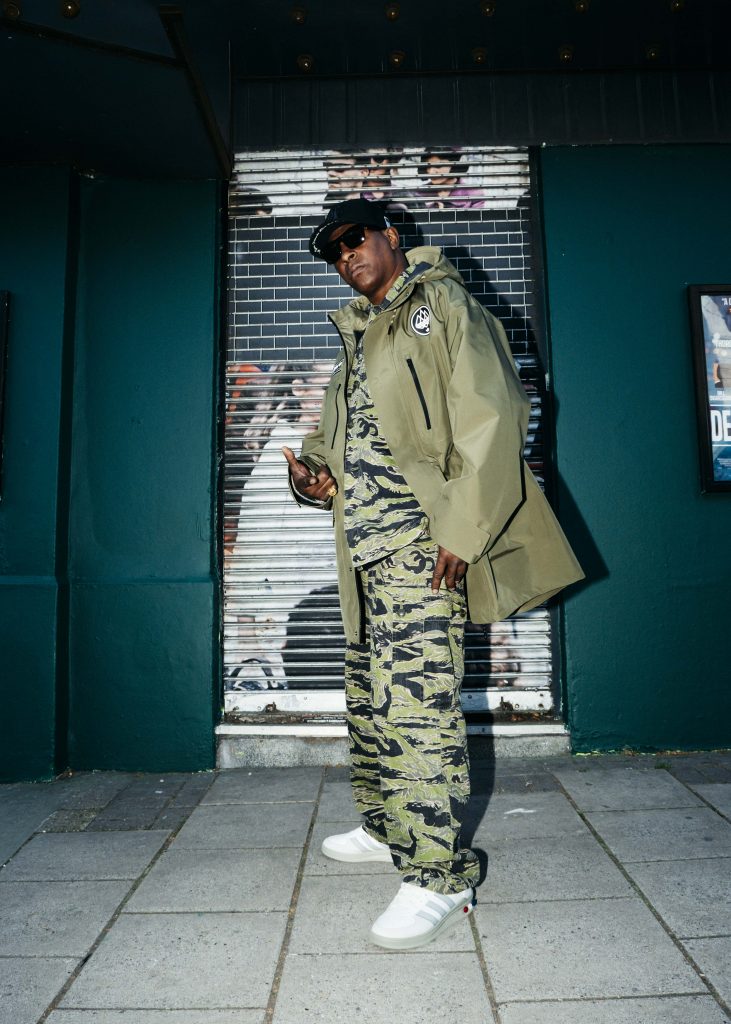
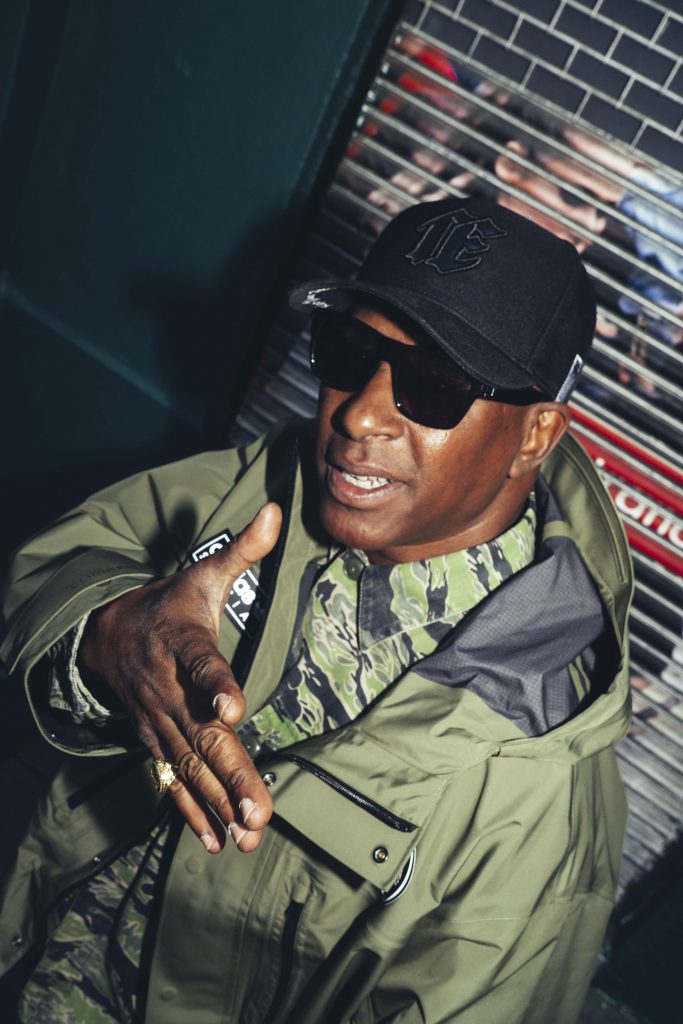
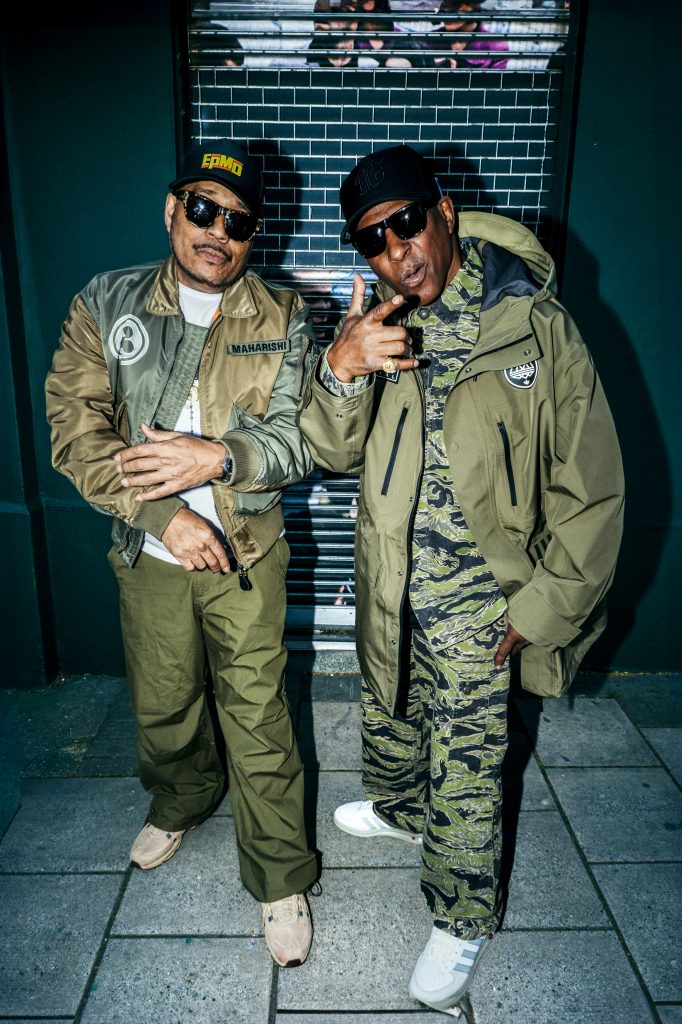
Jacket Adidas Spezial, Overshirt & Pants Maharishi, shoes Adidas Spezial
So, how did your relationship with Mobb Deep develop?
I’m originally from Queensbridge, but I moved to Brooklyn when I was younger after my dad passed. Even then, I stayed close with my people back home. I’d get calls like, “Yo, come to Queensbridge this weekend,” or “Meet us in Manhattan.” One day, I got a call saying Havoc was going to be in the studio. I didn’t really know Prodigy like that at the time, but I was told to pull up. So I jumped on the train and headed over.
When I got there, my guy Twin (Scarface Twin) was like, “Yo, tell P that rhyme you always spit for me.” I was just trying to chill, lay back, let everyone do their thing. But he kept pushing me, like, “If you don’t say that rhyme right now, we’re gonna have a problem.” I could already picture us knocking stuff over in the studio, so I just went ahead and spit it. That verse ended up on Mobb Deep’s first album on 4th & Broadway, on a track called “Stomp Em Out.” I don’t even remember the full verse now, it’s been so long, but that was my first time on a professional studio record. Just like that.
Back then, every project had a formula, you needed a girl track, a reggae track, and a hardcore track. I ended up on the reggae one. There was a Jamaican artist on the hook, I think he was from Staten Island, and that track was meant to be one of the singles. From that point on, whenever Mobb Deep were working on an album, I’d end up in the studio. It’s kind of crazy, across a few projects, I landed on multiple singles without even planning it.
What was it like growing up in Queensbridge in terms of survival, creativity and the overall atmosphere?
Queensbridge was everything. Even though hip-hop started in the Bronx, and that’s fact, Queensbridge was right there as competition. I grew up around that energy. Battle rap was a big part of the culture. I wasn’t even old enough to be at all the jams, but you still felt it. You knew Queensbridge was a place where stars came from, where people sharpened their skills against the best.
There was a real hunger, creatively and in terms of hustle. Everybody was trying to be the best at something. And fashion was a huge part of that too. We were fresh. Mismatched Pumas, one red, one blue, we didn’t care. It was about how you wore it and nobody dressed like us. Yeah, for real. Style was competitive, just like rap. Two people could wear the same thing, but it was about who styled it better, who made it their own.
For me, it was shell-toe Adidas, Levi’s, and a leather jacket. Or at least something that looked like leather, we didn’t always have it like that. Sometimes it was pleather, but we made it work. It was still fly. You had to be fresh.
We didn’t have loads of clothes, so the pieces you did have, maybe from your birthday or Christmas, you took care of them. If you wore something one day, you’d take it off and not touch it again for a while. You had to preserve it, keep it clean. Being fresh wasn’t optional, it was part of your identity.
As an MC, would you say style was as important as your bars?
Bars always come first. You’re a rapper, so you want to be the best lyrically, no matter what. Even if you didn’t have the best gear, your bars had to be sharp. But at the same time, style was just as important. It had to match. In New York, if you didn’t have style, people would clown you, it was over. Even now, I can go out and pick up something simple, $40 / $50 and people will stop me asking where I got it from. It’s not about how expensive it is, it’s about how you put it together. You gotta be the whole package.
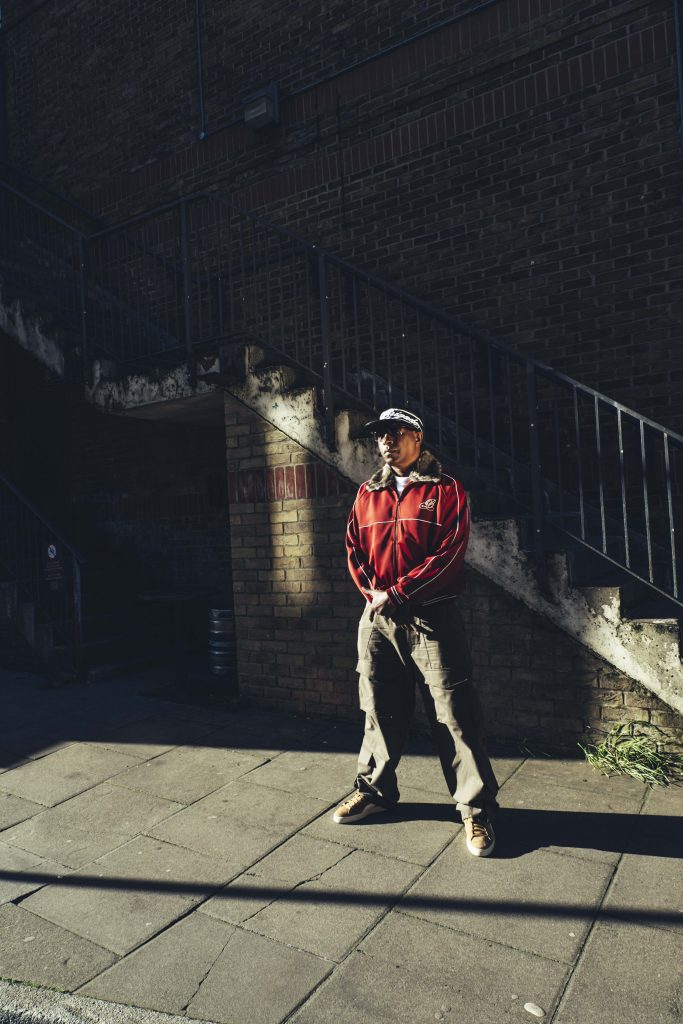
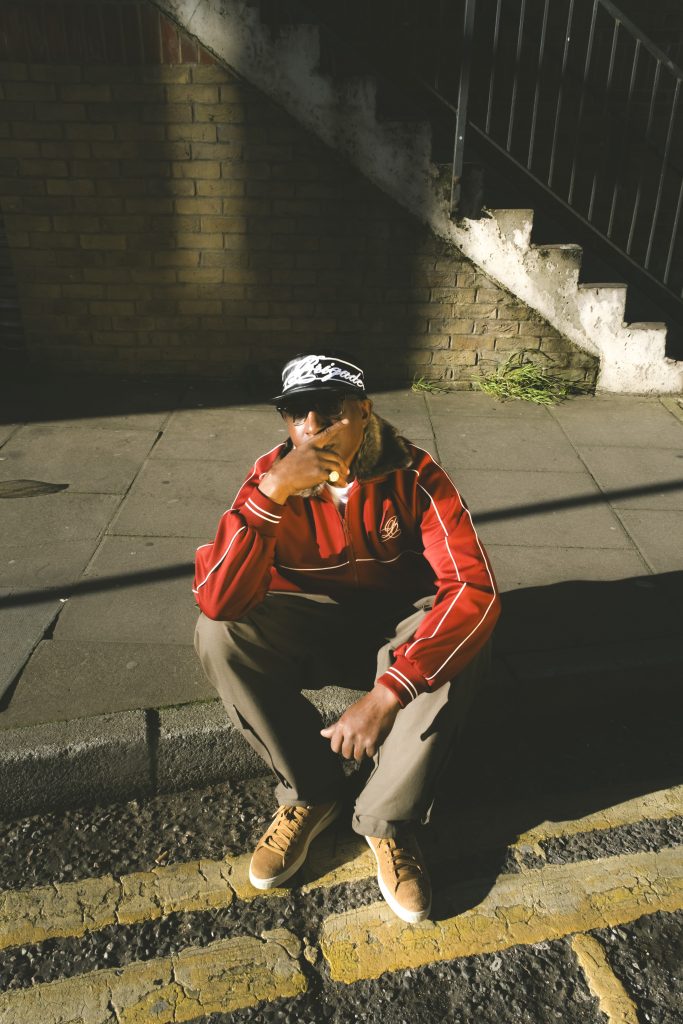
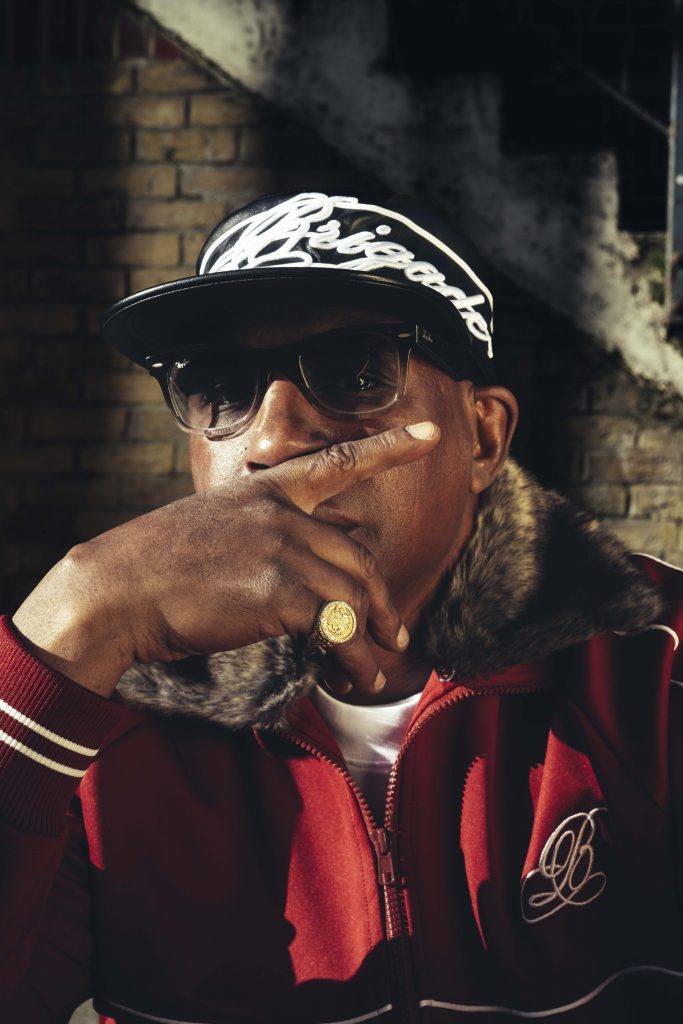
Hat, jacket & pants Brigade USA, trainers Puma, glasses Rayban
A lot of today’s fashion pulls from that ‘90s New York era. When you see younger generations trying to recreate that look, what do you think?
I love it. It’s not going to be exactly the same, but it’s dope to see it come back around. Take Champion, for example. That was our thing growing up, Champion, Tommy Hilfiger. Then it disappeared for a while. So to see it come back now, it’s kind of crazy. I remember when it was fresh and now it’s back again. I don’t think anyone styles it exactly how we did, but it’s still cool to see…
At the same time, there’s a feeling from that era you just can’t replicate. Everyone wants to tap into that ‘90s Queensbridge energy. We didn’t even have much. So when you put an outfit together, it was based on what you had, not what you could go out and buy. That’s what made it special. Someone else might not think to put those pieces together, but you made it work, and people would see it and be like, “That’s crazy, that’s fire.” There was definitely more thought behind it, because it wasn’t easy. You couldn’t just go online and get whatever you wanted. You had to go out and search. And when you don’t have much, you get creative. That’s really where that whole style came from.
Shifting back to the music, when people talk about your catalogue, there’s a real honesty to it. How much of your music is art, and how much of it is real life?
To be honest, it’s all real life. I don’t say it to brag, but where I come from, Queensbridge – it’s one of the toughest places, one of the biggest housing projects in the world. The music comes from that reality. I’ve been through it, I’ve been to jail, I’ve been shot, I’ve been in situations where I had to defend myself. I’ve seen people close to me go through the same things.
Of course, in music, things can get exaggerated, that’s part of it. But the foundations are all real. Either you experienced it yourself, or someone you know did. That’s why the music connects, it’s not made up. It comes from lived experience.
When you’re in the studio, how do you approach creating? Is it instinctive, or do you have a process?
In the beginning, it was all about writing. You’d come to the studio with your rhymes already prepared. Ideas and stories, everything was written down. Everyone had a Rhyme book. That was everything to you, you guarded it like it was gold. Losing it felt like losing your phone or your keys. You’d be running around stressing like, “Where’s my book? Where’s my rhymes?” But once I started spending more time in the studio, the process evolved. It became more about creating in the moment, not freestyling exactly, but building ideas together.
Being around Prodigy and Havoc, we’d all be in the same room, each in our own zone, listening to the beat, catching a vibe. You’d hear what someone else was doing, then build off that energy. After a while, it would turn into, “Let me hear what you’ve got so far,” and that’s how things would start coming together. Once we were in the studio, the process became more collaborative. It would be like, “Let me hear what you’ve got… let me hear what Havoc’s got…” and then we’d all come together and listen to everything as a collective.
Sometimes I’d say something in a verse and they’d stop me like, “Nah, that’s not a bar, that’s the hook.” Even if it was part of my rhyme, they’d recognise it had a bigger purpose. Same with Prodigy – he might be in the middle of writing something crazy, and Havoc would jump in like, “That line right there, flip it like this,” or “Use that word instead.” It became less about individual writing and more about building something together.
We’d all come with our own ideas, but the magic really happened when we brought everything into the same space and shaped it collectively. That said, there was still structure. You might come in with a full song written and try it over different beats to see where it landed best. That’s something I still do to this day.
I still write at home when I want to focus on something specific, but I also go to the studio just to catch a vibe. Back then, the studio was more than just work for me, it was an escape. A place to get away from the hood, relax, and create without pressure. We’d grab a couple of pizzas, some drinks, enough to feed six or seven people, and just vibe out.
It was fun. It kept you out of trouble, but still gave you that same energy.
Do you still keep a rap book now? Are you still writing like that?
Yeah, I still write, pen and paper. A lot of people use their phones now, but I’m old school with it. Even being out here in England, I’ll hear certain words or phrases, like how people say “mate”, and I’m flipping that into a bar. Little things like that inspire me.
Where do you draw your inspiration from now, especially after being in the game for so long?
A lot of it still comes from the people around me, especially my peers. I can still listen to something Prodigy said and feel like, “Nah, I’ve got to go harder.” That competitive spirit never leaves. It’s not about being better than someone else, it’s about being your best. But at the same time, that’s my brother. I want him to win too. It’s just that natural MC mindset, you always want to elevate your level. And I still get a lot of love from other artists. Whether it’s people in New York or artists out in LA, or even globally, there’s always that respect.
My biggest setback, though, came at a crucial time in my career. I got signed to Tommy Boy Records and had one of the biggest deals at that time, around $300,000 as a budget. This was around when Nas dropped Illmatic, and AZ had just come through with “Life’s a Bitch.” We both got deals off the strength of a single verse, mine was “Give Up the Goods” with Mobb Deep.
But I messed up. I got into some trouble and ended up locked up. What’s crazy is, I had just finished shooting a full feature for Vibe magazine, and back then that was huge. While that issue was out, with a full spread of me in it, I was sitting in Rikers Island. I remember a correctional officer coming up to me with the magazine, asking, “Please tell me this isn’t you.” And I had to tell her, yeah, it was me. You’d open the magazine and see my photo across one page, the interview on the other… and I’m locked up at the same time. That moment really set me back.
How was that experience, especially with everything we hear about Rikers?
I’m not easily shaken, but I’ll be real, I was worried. It was my first time being locked up, and I saw people walking around with their faces bandaged up, hearing stories about what goes on in there… It was a lot to take in. That environment, it’s real. And stepping into that for the first time, not knowing what to expect… yeah, it definitely hit me. Had me shook. But at the same time, I’m prepared for it.
Mentally, I was prepared for anything. I’ve always been someone who keeps their head on a swivel, always aware, always watching. So going in, I was ready for whatever could happen. But at the same time, I was thinking, damn, I messed up. I could’ve been on tour, I could’ve been working on my album. That’s actually why my first project with Tommy Boy ended up being an EP instead of a full album. I never got the chance to finish it. They had to piece it together using whatever songs I’d already completed.
That’s where Havoc and Prodigy really stepped up for me. They basically executive produced the project, something I didn’t even fully understand at the time. They took the best verses, the best beats, and shaped it into something cohesive for release. Of course, I lost the deal. But to their credit, Tommy Boy still supported me, they got me a lawyer. That made a huge difference. I could’ve done a lot more time if I didn’t have proper representation.
Coming out of that, did it change your mindset? Did it push you onto a different path?
It did, but it wasn’t that simple. It put me on a straighter path mentally, but at the same time, I still had to survive. I’d lost the deal, and people don’t always realise, everything is recoupable. The advance, the lawyer fees, it all had to be paid back. So I came out of jail already in debt. And because the project was only an EP, there wasn’t much money coming in from the music.
Luckily, I was still able to move around, do shows, travel with others, that’s how I started earning again. But I still had to hustle. So it definitely made me take things more seriously, but I also had to balance that with my reality.
What lessons did you take from that period that still stay with you today?
The biggest one… You can’t play both sides of the fence.
If you’re going to live a certain way, you’ve got to commit to it fully. And if you’re trying to build something, you’ve got to give that your full energy. Trying to juggle both, it doesn’t work. That’s a loss from the start. It also made me realise not to take anything for granted. I could’ve lost more than just a record deal, I could’ve lost my life, or been locked up for 10 – 15 years.
I ended up doing about a year, and I beat the case. The charges were serious, but having a good lawyer made all the difference. If I’d had a legal aid attorney, it could’ve gone very differently. That whole experience just reinforced one thing, work hard, stay focused, and don’t take opportunities lightly.
Bringing it to the present, what’s it like still touring the world?
It’s beautiful. Where I come from, you don’t even imagine seeing places like London, or travelling the world. That’s not something you grow up thinking is possible. The first time I went to Amsterdam, it blew my mind. Just seeing how different things were, the freedom, the environment. Back home, you’re dealing with a completely different reality.
When you’re travelling, performing, being welcomed, being celebrated, it gives you a whole new perspective. It makes you realise how far you’ve come, and how much bigger the world really is. It’s a big world out there, way bigger than just Queensbridge. I’ve been fortunate enough to really see that for myself. I’ve been to Russia, I’ve walked the Great Wall of China… experiences like that open your perspective.
Coming from where I come from, I’ve always had a love for travelling. So to still be able to move around the world, perform, and be respected everywhere I go – it means everything. That’s what makes it so special. At the same time, it’s bittersweet. It doesn’t feel complete without Prodigy. I know the fans want to see him, and I want to see him too. That’s the part that never sits right. I want to see him on stage absolutely killing those verses, his swag, the way he hits the words. That’s what makes it for me.
In the bigger picture, I understand Prodigy. This is what he wanted to do, keep repping the Infamous name and keep that energy alive. I genuinely believe that. I don’t say that just because I’m the one reciting his words. I’m telling you, this guy was all about Infamous, “us against the world.” That was his mindset.
That’s why we even did the film together. Instead of taking a label deal and doing another Mobb Deep album, he was smart about it. He realised: why let the label control the budget when we can take it ourselves? So he took the money, bought a house, built a studio, and invested the rest into making a film. That became “Murda Muzik” (2004).

He said, “That’s your energy! You’re going to be the star of the movie, we’re going to build you up.” I don’t know if people have seen it, but it’s basically built around that world. Prodigy even wrote the script himself, he had me in mind when he wrote it. So I know he would want us to keep repping this, pushing it forward with music, film, fashion, everything.
He was one of the first I saw really build the Infamous brand properly. We all had the dragon tattoos, and he turned that into merch, into a store uptown. T-shirts, designs, everything tied back to that world, dragons, 40s, blunts, that whole aesthetic. He made it a brand. I know he’d want this to live on and grow.
A lot of groups fall out over time, but you guys stayed solid. Why is that?
It’s respect. That’s the main thing. Before people started talking about “giving flowers,” we already knew what it was. We used to call Prodigy “science” because we knew how dope he was. People would try to debate it, Havoc versus P, this or that, but for us it was never a debate. We knew what we had. Same with Havoc. Anybody could share beats with us, Nas, anyone, and we’d rate it, but we’d always say, “Yeah, but my guy is different.”
That mutual respect kept everything solid. We always backed each other. Even when we were young, we knew: nobody’s messing with these two. That foundation is what kept the relationship strong all these years.
Moving to present day, you discussed a project your working on, what do you have coming up?
Yeah, I’m glad you asked that. Right now, I’m working on my new project called “Thun Language”. We decided to extend the tour another week or two, and just lock in. We went to Havoc’s crib and started building the idea for “Thun Language”. Me and Havoc on rhymes and hooks with L.E.S. and Havoc on production. When I finish this European tour I’m planning to go to LA to work with Alchemist too.
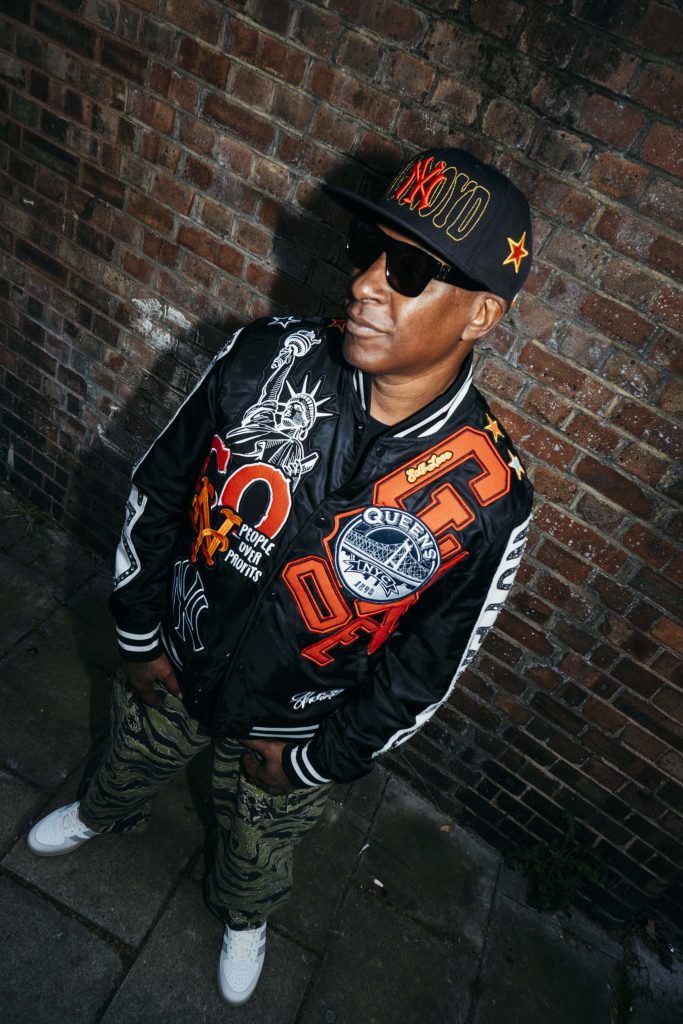
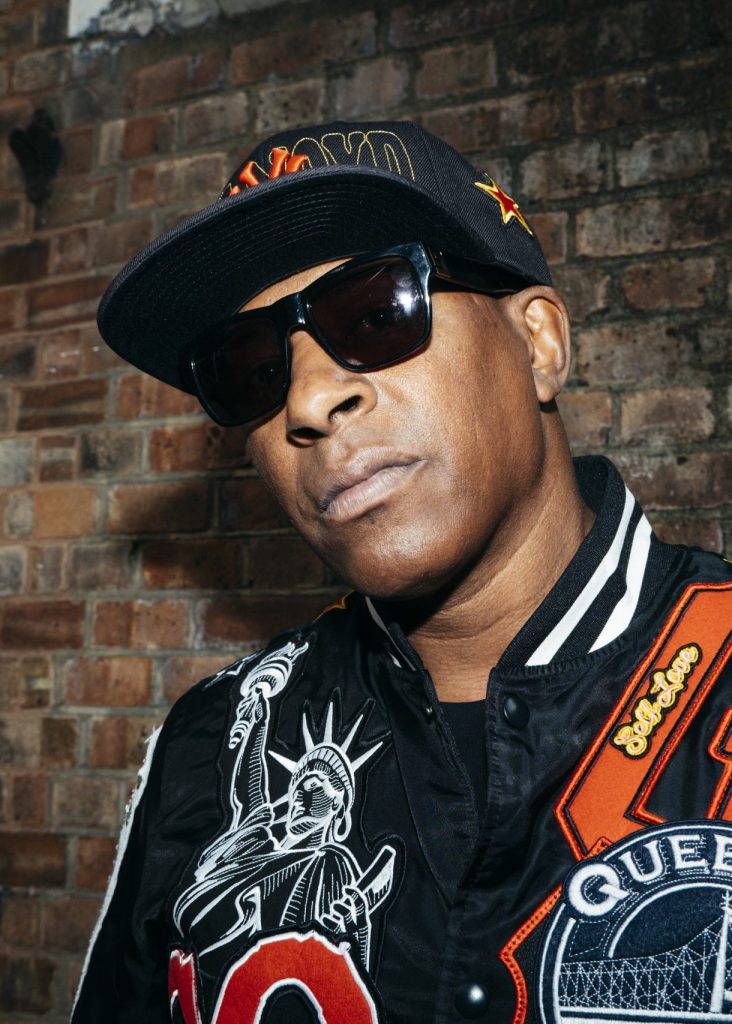
Custom jacket & hat Simon Parchment, pants Maharishi
What is “Thun Language?”
The name Thun language, that’s something we call each other. It’s really a Queens thing. One of the guys actually had a lisp. I don’t know if that’s the right word, but he couldn’t properly say “son.” He’d say “thun”, We used to laugh at it at first, but it stuck. We all just started saying it, “yo thun, yo thun”, joking at first, but it became real. That’s how it evolved. That slang, it started right there. Even Jadakiss has referenced it in his own way. It’s just part of the culture now.
One of the guys actually had a lisp. I don’t know if that’s the right word, but he couldn’t properly say “son.” He’d say “thun, We used to laugh at it at first, but it stuck. We all just started saying it, “yo thun, yo thun”, joking at first, but it became real. That’s how it evolved.
Then on one of P’s track’s, he even said : “You’re trying to speak the thun language.” That line just stuck with us. That became the inspiration. We thought, this is it, this is the language of Queensbridge. We started building around that idea: what P represents, what Mobb Deep represents, what Queensbridge represents. That’s when we decided the album would be called Thun Language.
What’s your timeline for the album?
So the lead single is “Smoke”, produced by L.E.S (Release date TBC).I actually shot part of the video while I was in London with my guy Sam. When I get back home, I’m going to shoot more in Queensbridge, go back to the block, see the people I grew up with, and then finish it in Times Square.
Once the video is done, I’ll drop the single. I just want everything ready before I release it. So realistically, about a month away from completion. We’ll probably wrap filming after this tour, early May, and then finish post after that. So we’re looking at a summer release…


