


Few producers can say their very first official production became one of the most celebrated records in hip-hop history. Yet Queensbridge native and legendary producer LES, that surreal moment arrived with Nas’ timeless classic “Life’s a Bitch”… a record that would define an era and launch a career responsible for some of rap’s most iconic sounds. Raised in the same Queensbridge Houses of pioneers like Marley Marl, MC Shan, and Roxanne Shanté, LES witnessed hip-hop being built.
From DJing local park jams, selling homemade mixtapes, and studying records eventually evolved into a production career that would see him work alongside Nas, AZ, Big Pun, Capone-N-Noreaga, Will Smith, Jennifer Lopez, and countless others. LES reflects on the journey from carrying crates through Queensbridge to producing platinum records, sharing stories behind classics such as “Life’s a Bitch,” “Sugar Hill,” “Phone Time,” and “Welcome to Miami.” Along the way, he discusses his creative process, the art of sampling, lessons learned from legends like Marley Marl, Q-Tip, and Dr. Dre, and why, despite decades in the game, the excitement of discovering a new sound still drives him today.
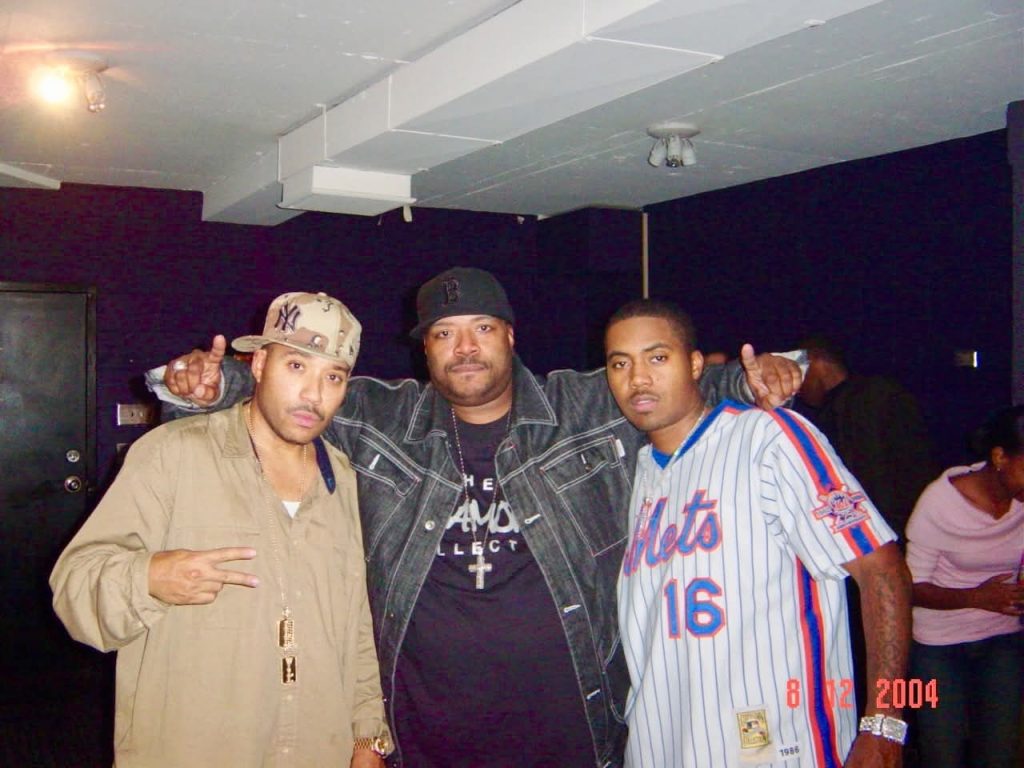
What sparked your passion for music and made you want to become a producer?
The passion really came from the people I grew up around. I grew up in Queensbridge Houses, watching people like Marley Marl, MC Shan and Roxanne Shanté. Seeing the artists and being surrounded by that whole environment made me want to be a part of it. It looked fun, but more than that, it felt possible because it was happening right in front of me.
How did that passion develop?
Before production ever entered the picture, I was following the same blueprint Marley Marl had laid out years earlier, DJing in parks, at outside jams, and throughout the neighbourhood. I was putting out my own mix CDs, selling them directly to people. That’s what really started everything. People connected with the blends, the transitions, the mixtapes. That’s when I realised I could actually produce.
DJing became the gateway into beat-making. Through blending records together and studying what was happening around me, production slowly started to make sense naturally rather than academically. I watched what equipment producers were using, learned by ear, and eventually decided to invest in my own setup.
The first thing I bought was an Akai MPC3000. Then came the moment that still sounds unbelievable even now. My first record ever I officially produced was, Life’s a Bitch for Nas… Still one of the most iconic songs in hip-hop history. That was my first track ever. Even now, I still think it’s surreal. It felt like a dream. Honestly, sometimes to this day, I still can’t believe I produced that record.
How did you connect with Nas?
The connection to Nas happened organically through the neighbourhood. Ill Will, someone Nas often referenced, used to buy my mixtapes and bring them back over to Nas’ side of the projects. Through those tapes, Nas was already becoming familiar with my DJing style, blends and overall sound before we had properly connected.
Ill Will was always the first one asking for the tapes. He’d tell me, “yo, as soon as you finish, let me know.” He used to walk around with this huge radio box playing the blends everywhere. Eventually, Nas reached out directly when he needed a DJ for “Halftime”. That opportunity quickly turned into something bigger, with DJ footage from that night even ending up in the video itself.
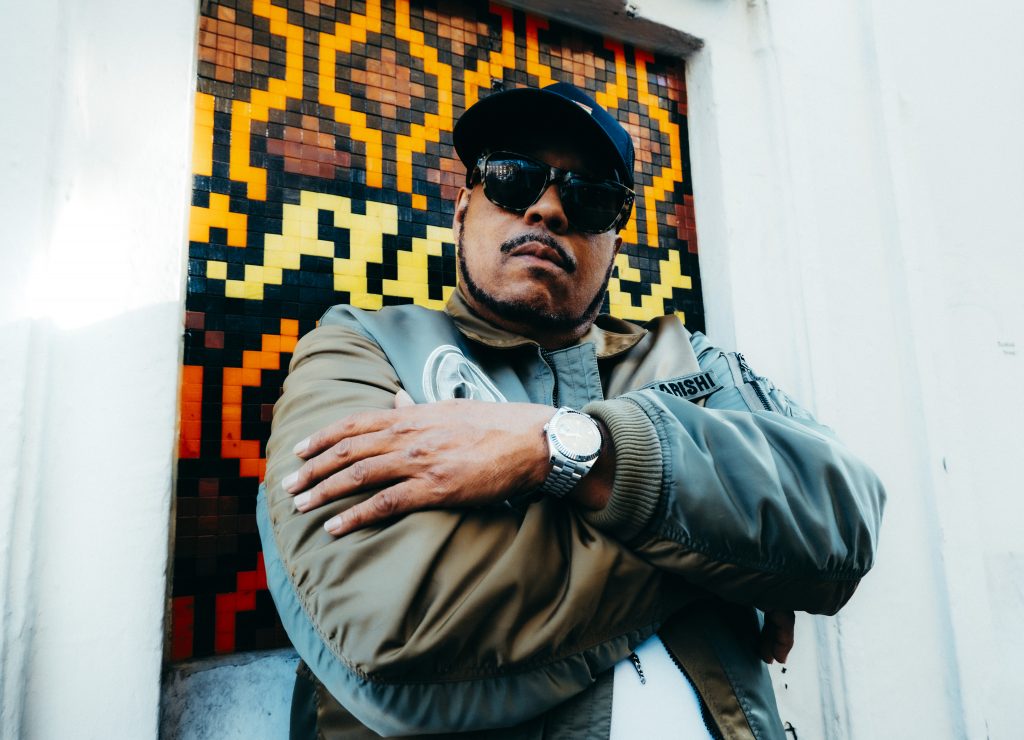
Everything just started happening naturally from there. It was super organic. At the time, the mixtape grind was relentless. I was releasing one tape every month, constantly feeding the streets with new music and new blends. At the end of each tape, we would include original production layered into existing records, what a younger audience today would call mash-ups. Back then, though, they were simply called blends. The blend era was really the foundation of everything. Taking the instrumental from one record, the acapella from another, and making them work together naturally.
So you said that you started with an Akai MPC 3000 as your first choice to start with. How has that evolved, and what do you use now?
Yeah, I used to use the Akai MPC 3000, but now I use the MPC Renaissance, which is in the Akai family. I use this with FL Studio, which is a computer-based program. You can actually do a hundred times more than what an actual drum machine can do, as far as the technical and detail stuff.
So when you’re producing, How does your creative process work? What comes first? The sample, the drums, the loop?
It depends on who I’m making it for and if it’s for someone who want it drum-driven, or someone that wants it to be smooth and melodic – like I would do for Nas or AZ. I try to find a sample first, a nice smooth loop, and then I try to build it up from the ground from there with the drums, the hi-hats, snare, and all the bassline.
If I’ve got to get a bass player to come in and play the bass live, which I do on some of the songs to get that authentic sound. I start with the melody first, and then I take it all from there.
Do you prefer to cater to the artist? Do you just have tracks ready or beats ready, or do you prefer to create for someone specifically?
It depends. If they want something and I’ve got it on the computer, I’ll pull up some stuff and see what they pick. Usually I have an idea, trust and believe, they’re going to hear some stuff and be like, “Yo, lets run that”. Then I’ll build it up from there. Being that I know what the artist looks for, I’ve got room to grow and room to make my changes and make things work. Always refining.
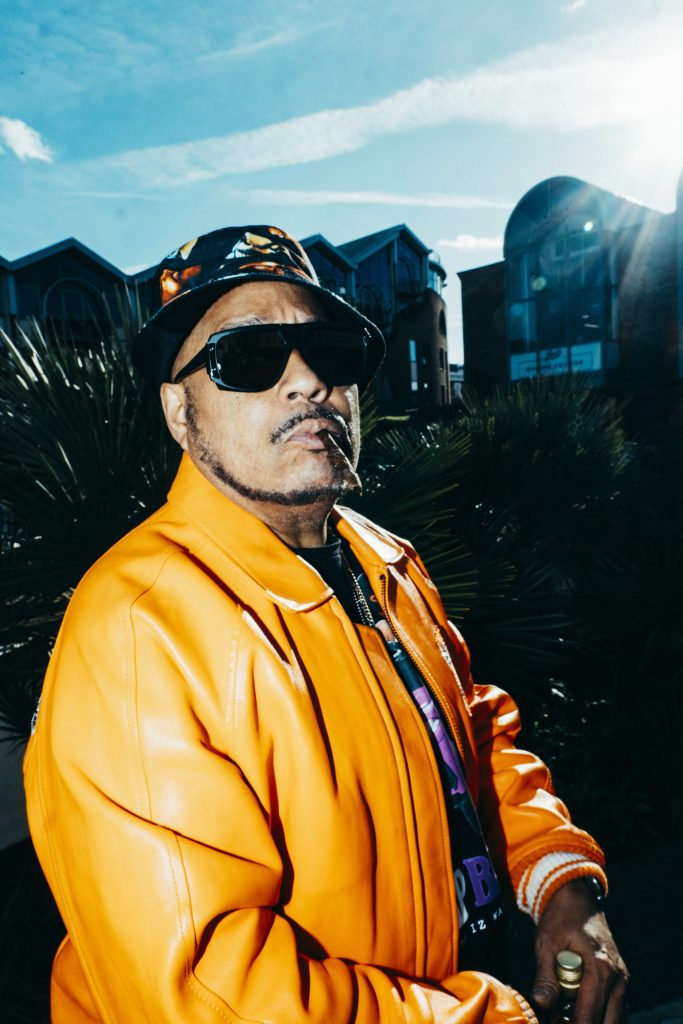
In regard to samples, what is your process in finding and searching for samples? Do you have a list somewhere?
Nah, there isn’t really a secret list of samples, that’s the thing. That’s the fun thing about it. There’s so many records out there, and you never know what you’re going to hear and what you’re going to take. The sampling is the fun part, it’s just digging and going out to record stores.
When me and Havoc went out to Colombia, they had a huge record mall. It was a producer’s dream. It was like a playhouse. Like all these records, and then you can listen to them, listen to the styles, and hear the instrumentation. Each year, each genre, each artist has different kinds of flows in their records, but you can tell the difference. I brought back a case full. It might take a whole eight hours of listening to records just to find something that I’m looking for or sometimes I hit it in the first hour. As soon as you get in there, you might hit it.
Has there ever been a session where there have creative differences? And how do you manage that when it happens?
I don’t really have differences in music. There’s always situations where you get , “I don’t like the snare,” or “I don’t like the hook,” or the artist wants a certain kind of hook on a record. But when you’re producing, you can’t be too pushy. They say something and “I like the way this hook is because it feels so organic,” it might not be the hook you were looking for. You might have been coming in trying to get something aggressive, and now you’ve got the opposite. So yeah, sometimes you’ve got to go with it. But at the same time, that’s the creative part. Those moments are simply part of the process rather than conflict. Building records has always been collaborative, shaping ideas in real time until everything locks into place.
When you were coming up, who inspired you?
Marley was definitely the top one. And then there was Q-Tip from A Tribe Called Quest. I actually met him at a lot of points in my career. I took a lot of notes from him because I was in the studio with him. So I just watched him and learned. Premier is up there and Dr. Dre is definitely a mention. I used to take his records and just play them, put them under the microscope and be like, “God damn, how did he make this?” The drums, and the way everything sits, and how it’s arranged, it was perfect..
I ended up working with Dr Dre on “The Firm” album, because I produced “Firm Biz”. He actually loved the record so much he mixed it for me. So I got to watch the process of him mixing. He also put Dawn Robinson on the hook to sing the vocals on that record. The way he had that thing sounding, it went from sample into a track, and then everything else was added on top. It sounded so thick. It didn’t sound like something played live, it sounded massive.
And in terms of what still drives you creatively today, where do you take your inspiration from?
What drives me now is just the way music is being produced and showcased now. You’ve got great producers out there. There’s still good music coming out. They’re still sampling, still digging. It’s making it fun again, like, “Should I go back in the crates and pull something out?” But right now it’s dope. It’s definitely dope.
With that in mind, what are your thoughts on AI in music?
AI is really dope. It just depends on how you use it. If you want to be lazy and just tell AI to make it, then yeah, cool. But you can also use it properly, sit there, generate ideas, then tweak it and build from there. I have not really used it. I’ve seen people use it, but with the way I make music, I don’t need it.
Maybe for things like sample matching, if you’ve got a sample and want a different key, you could use it for that kind of help. But I don’t think people are leaning on AI to make hip-hop. And if you are relying on it fully, then that’s not really it.
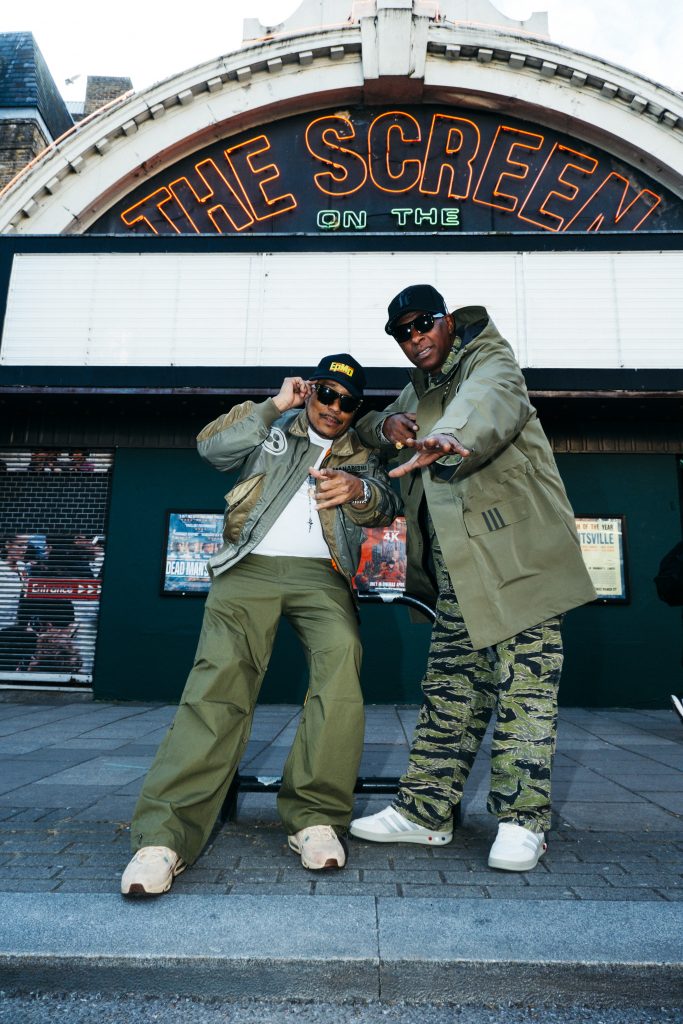
Have you ever turned anything down that you regretted?
No, man. I did all the stuff that came at me. I didn’t turn anything down and say no. You know, Jennifer Lopez, I did all the stuff that people wouldn’t think that I would do, but I did it for the love of it. Yeah, so I don’t ever close a door and just be like, “Nah, I’m not working with this one It’s more like, “Yo, we’ve got this piece, how can we transform this into that?” And that was one of my strong points. I could listen to an old-school record and see what it could become.
Were you musically gifted as a child? When did that start? Was anyone in your family into music?
No, there’s nobody in my family who did music. My father was a number writer, and my mum worked two jobs. She wasn’t in the streets or anything like that, she worked late, went to work, and even went to school after. So she’d come home late.
I think it was more about watching hip-hop being developed in front of me. It was being created and I could do my part. My brother used to come home with tapes and be like, “Yo, this is what they’re doing in school, they’ve got school jams, they’re DJing.” He’d bring the tapes and play them for me.
Then he’d bring the turntable home, and I’d sit there playing with it like, “Oh shit, this is what they’re doing.” So I was just watching it form and be created around me.
What was the turning point in your career?
Right after Life’s a Bitch, everything started moving quickly, but at the same time I was still deeply rooted in the same environment, producing for Nas while also being his DJ. That meant constant involvement in both the studio and the streets, wherever I was needed.
Around that same period, AZ, who had appeared on “Life’s a Bitch”, was also trying to secure a record deal. After landing with EMI, there was pressure for him to deliver a single, and that’s where everything aligned. AZ’s voice naturally matched the kind of sound I was building at the time. I was sitting right there in front of him, understanding his tone and direction, making it a natural fit creatively. That’s when I did “Sugar Hill”.
The impact was immediate. My second major record went platinum, Nas’ album went gold, and AZ’s single also went platinum. Suddenly, everything I was touching was translating into success. That moment became a turning point. From there, labels started calling constantly. Sales were climbing week by week, and I remember being told records were moving 25,000 units a week and already heading toward platinum status.
But that period became a defining shift, not just commercially, but mentally. It gave me so much confidence that what I was creating wasn’t just working locally, but resonating on a larger scale.
Do you remember your first music check, and how that felt?
I don’t remember how it felt. I was just working and everybody else liked what I was doing. It was fun, and I think that’s why it was so authentic, because we weren’t doing it to make money. We were doing it because we were being creative. We wanted to do something for the love of it.
We had no idea that a man making beats could be filthy rich or make that kind of money like producers do today.I learned it along the way. I was a young producer, everything was good. Q-Tip lined me up with a lawyer and taught me what I needed. Once he told me that I got a good lawyer, he introduced me to a few people, I picked one, and I left the business side in his hands, to be honest with you. There were a couple of bumps in the road, but for the most part…
I focused on buying equipment like a beat machine that cost $3,000 and spent like $2,500 for keyboards and stuff. When I spoke to Marley and Q-Tip they were like, “Yo, every time you get a check from music, make sure you put some money aside to buy new equipment.” Keep updating your equipment, that’s something I always did. Every time I got paid for a beat, I bought a new machine, a new keyboard.

What was your relationship with style growing up? Hip Hop and style are always linked.
When I was younger, I was into sneakers because you had to be. You couldn’t come outside with bad sneakers on. I was heavy on New Balance and Nike Cortez. I used to switch it up. Back then they weren’t expensive, $40, $50 a pair.
We were wearing Fila suits, corduroy pants… Champion hoodies too. We used to go to the Army and Navy store and buy camo there. It was cheaper, you could get pants for $40. It was fly and that was what we had around us. Timberlands, New Balance, Puma’s, the red and blue suedes. Everything was about how you put it together.
Some people would just throw shoes on straight out the box, laces however they came. I’d be like, nah, you’ve got to fix them. You’ve got to make them right. It was amazing back then. The fashion, the clothes, everything was part of it. It all blended together naturally. You couldn’t not have style. Even if you weren’t trying to, you still had it. Even if it didn’t match, you made it work.
NAS – “It Ain’t Hard to Tell.”
I feel like my best is definitely the first track I ever did with Nas. Nas was working on his album. I was DJing for him at the time. They kept calling, like, “We need to finish this album today.” So I went into the studio to bring him some of my beats so he could listen to what I had for his first album. And a beat I had called “Submission” was the beat he picked.
And then we made history from there and put AZ on it. His father came and played the horn on the intro and outro. And the rest is history. It was just a great moment. It was a two-day process. I knew it was dope for sure. It had a feel to it. I didn’t think it would be as big as it is now, but I knew it was a good record.
The way we produced it, the way it came out, it just worked. And Nas already had other records done, so we knew we were filling in the missing pieces of the puzzle. It was basically the last track. Everything else was done, and we just needed that final piece to complete it.
I had the sample looped already. When he asked for beats, I already had it made. Yeah, I made it at home, just in the crib messing around. That was the first one I played, I didn’t even get through the rest. I still have the disc today with his name written on it.
I think it was meant to be.
I still don’t believe it sometimes.
You were in the music video, did you get involved in the rollout or marketing?
No, not at all. We were just at a party and someone had footage. There wasn’t any preparation or planning. We was all in the moment. They just shot clips and used them. It’s interesting because producers often don’t get featured, especially back then. Now we have beat tags, but producers were usually left out; it seemed quite new at the time.
AZ, “Sugar Hill.”
So I suggested getting Miss Jones from Story Projects to sing the hook. Her tone fit perfectly… Then it was a wrap! I was actually DJing for her at the time, so I made the connection. I called her, she came to the studio, and she nailed it. At that time I’d never made a suggestion like that. I was just making beats and this was one I had lying around. When I realised he was actually going to pick something I’d already made. I just started using my ear and making tweaks and it all fell into place
Had you worked with many female artists at that point?
No, not really. Hip-hop back then was very male-dominated. That was probably one of the first times I’d even been in a studio with a female artist properly. There was no push back though because she was coming in to do a hook. Everything was already laid out, the melody was there from the sample, so she wasn’t coming in to build. It was more about execution. We just adapted a few words and had her deliver it in a way that fit AZ’s tone.
Once it was finished I knew we had a hit. You can feel it. At that point it becomes instinct, you can tell when a record is going to move. Things moved fast because of deadlines. The label had already committed to a lot of records, so there wasn’t time to sit on anything. They needed it done and out.
Were you brought in off the back of the Nas work you mentioned earlier?
Yeah, 100%. That’s how it works. Once you’ve already done something successful they give you another shot. It’s like, why go elsewhere? You’ve proven you can deliver. Plus, at that point I was still building my name, so the budgets made sense for the labels too. It was untapped potential. People knew I could do it, but I wasn’t established yet. So it just made sense to keep it moving.
Punisher – “Glamour Life”
That was a really special one. It came off the back of the Fat Joe record I did, “Crack Attack”. From there, everything just rolled into place. We ended up in Battery Studios in New York, and it was one of those moments where everything just aligned. You had the whole Terror Squad around at the time, like five MCs in the room, Big Pun, Cuban Link, Armageddon… It was real energy in there.
The vibe was just crazy. It felt like a proper New York studio moment. Everyone was feeding off each other, laughing, working, just building. It reminded me of that same Queens energy – not industry-polished, just raw people making music. And what made it even better was how natural it all was. There was no tension, no politics, even with everything going on between different sides of New York at the time, in that room it didn’t matter. It was just music and energy.
Big Pun was funny as hell. He’d come into the studio, sit down in this massive chair, and you could see he was tired just from walking in. He’d literally sit there for a minute, catch his breath, get himself together… then we’d start working. That was just him. It was a one-day session as well. In and out. Everyone came ready, verses, ideas, everything. The beat was already there, so it was just about capturing the moment. The only real issue I remember was I actually lost the disc.
So I had to rebuild the beat afterwards. Luckily it was only a simple pattern, a few sounds, a loop, kick, snare, hi-hat. I went back through everything I had, piece by piece, until I found the exact sounds again. I had the CD to reference, so I could match it properly. In a way, I think it actually came out better the second time around. Sometimes those mistakes end up improving the record.
Capone-N-Noreaga “Phone Time”
“Phone Time” that’s one of my favourites, just because of how that beat even came about. I wasn’t even making it for him specifically. I was just at the crib one night, probably like 12 o’clock, just watching a movie. Something came on in the soundtrack and I swear I heard something nobody else in the room caught. I was like, ‘Yo… did you hear that?’ Everyone’s looking at me like I’m crazy. My man, even Super who was with me, nobody heard it. I’m saying, ‘Nah, you must be deaf, listen to that.’
I waited for the credits to roll, wrote the name of the movie down straight away. Then I jumped in the car and drove into Manhattan. Tower Records was 24 hours back then, so you could literally go anytime and grab music. I got there… couldn’t even find the soundtrack. So I ended up buying the DVD instead. I thought, ‘Cool, I’ll figure it out.’ I had a PlayStation at home with an RCA output, so I just ran the DVD through that and recorded the audio straight into the MPC 3000. That’s how I sampled it.
Later on, they hit me saying they needed something for Capone coming home. I played it for them and that ended up becoming ‘Phone Time’. They shot the video like it was a jail phone call, the whole concept came together from that moment. It was crazy. That whole record was built off instinct, timing, and just trusting what I was hearing.
Will Smith “Welcome to Miami.”
Finally we have the time I worked with Will Smith. For Two weeks we basically rented out and blocked the whole Hit Factory. They had four rooms and we took all of them. Trackmasters were in there, Tony Pope, Gowdy, Tom… all the best producers. Everybody had a role: writing, hooks, it was a full system running. I was there for the full two weeks straight just finishing the whole album. At that point “Gettin’ Jiggy Wit It” was blowing, so we had to close the project out to catch the wave.
I remember Steve Stoute telling me, ‘Go home and sample every record in your crate.’ I was like, what? He said, ‘Just loop anything you’ve got, everything in your crate, just flip it.’ So I went home and started digging. I ended up messing with ‘The Beat Goes On’, the Whisper version, and I started chopping it up. What made it different was I had the 12-inch extended version, not the CD version. Back then, 12-inches would give you extended mixes, DJs had those versions. That gave me more space to chop, more sections to work with. That’s something people forget now. Everything’s one click, stems separated instantly. Back then you had to really dig and listen. The extended version gave me pockets to build from.
At that time, the release cycle was fast. As a producer, it’s a race. I want to get from idea to finished product as quickly as possible, because once the label approves it, that’s when you get your backend payment and you’re done.They’d listen to the mix, approve it, and then you had a set number of days for delivery. Once it’s signed off, that’s it, contract done.
That said, you still had to make sure it was right. I wasn’t rushing the work, but I wasn’t sitting there tweaking it forever either. You don’t want to overcook it, and you definitely don’t want to miss the moment because another record drops and shifts the whole energy.
Working with Will Smith was just fun. What you see on TV is exactly what he’s like in real life… always joking, always laughing, always trying to make everyone comfortable. He’s a real personality, very down to earth, very present in the room. Just good energy all round.


