


From the lively city of Groningen in the Netherlands, DJ Tommy Green (Tommie Brink) is a standout figure in the electronic music scene, known for his eclectic mixes blending house, hip-hop, R&B and more with energy and precision. As a passionate sneaker enthusiast, he has now channelled his creativity into Bonsai to the World (bonsaitotheworld.com), a premium limited-edition sneaker brand inspired by the Japanese art of bonsai, symbolising patience, and balance. Releasing just 150 pairs worldwide, these high-quality sneakers combine minimalist design with subtle red accents, premium suede, mesh and leather, plus thoughtful details like a storytelling insole and removable rain protector.
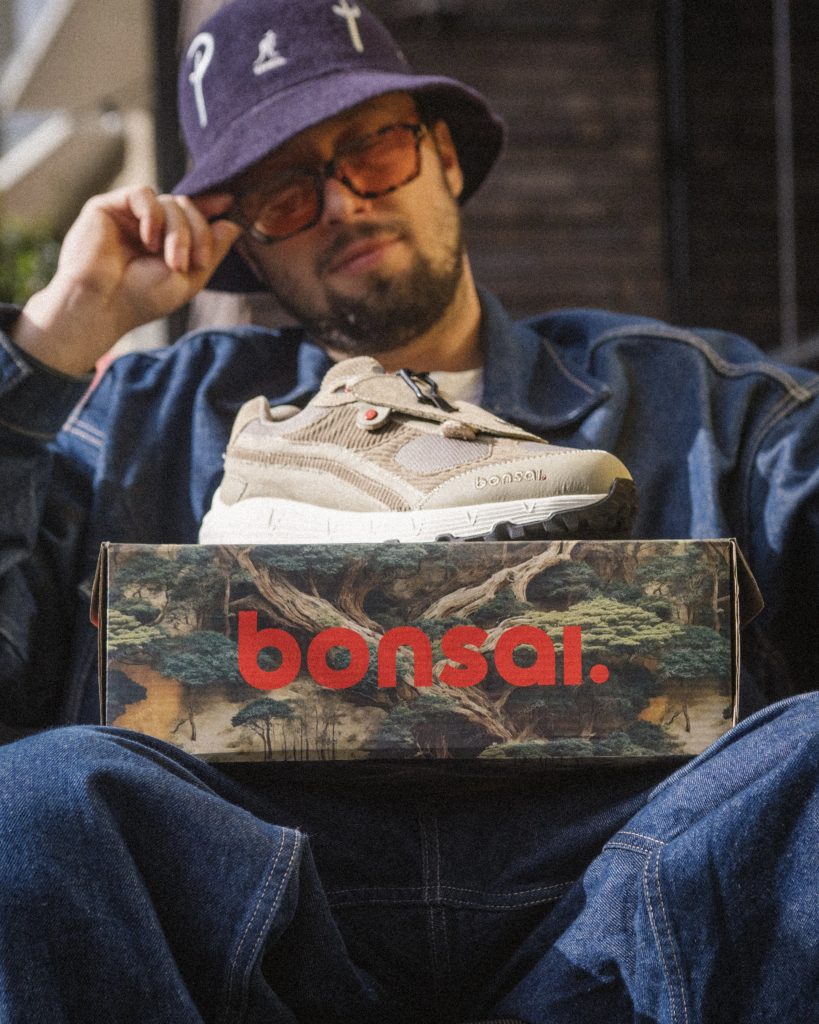
How would you describe your sound/style as a DJ? And does this influence your sneaker or fashion style?
I started DJing around twelve years ago, mainly playing hip-hop. These days, I play more open-format sets because I connect with many different genres and enjoy the creative freedom that comes with that. For me, DJing is about more than simply mixing tracks or “pressing buttons”. Elements such as scratching and using acapellas and instrumentals give a set more character and make it more recognisable and personal. I want people not only to hear a set, but to feel it as well.
Does that influence my style? Absolutely. I really see sneakers and fashion as part of hip-hop culture. Just like music, it’s all about identity, details and originality. “Real recognise real” definitely also applies to sneakerheads, in my opinion. Just as in music, I also enjoy contrasts in fashion: understated basics combined with standout details.
What does Bonsai say about you as a creative person that you cannot express through music or DJing?
Designing a sneaker has genuinely added a whole new dimension to creativity for me. Not only was I able to translate my own ideas into a product, but along the way I also learned an incredible amount about design, materials and the entire development process.
Since secondary school, I’ve been fascinated by sneaker design and the thinking behind certain models. Why a designer makes particular choices, how a silhouette is constructed, and which details ultimately make the difference. Through Bonsai, I gained real insight for the first time into what that process actually looks like. That made it not only creative, but also highly educational for me.
Designing a sneaker also feels different from making music. Music is often a snapshot in time, whereas a sneaker is something tangible that people wear every day. For me, that makes it a different form of creative expression.
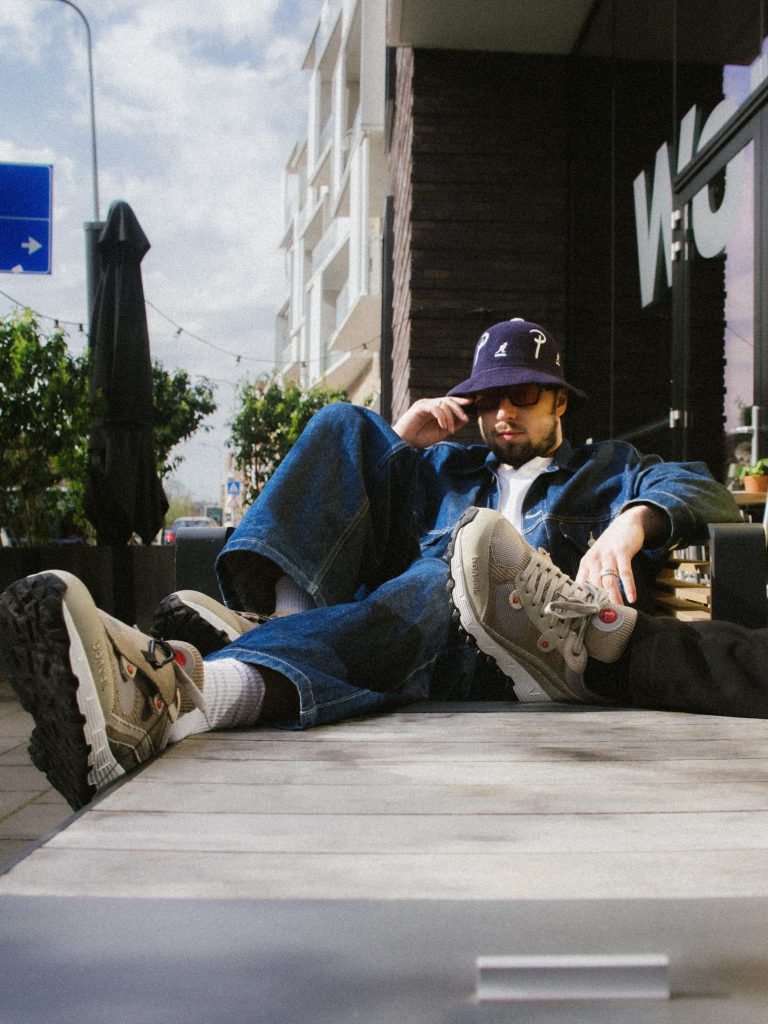
What do you do when you hit a creative block?
I think there needs to be a good balance between expressing creativity and recharging yourself. Whenever I hit a wall, I often notice that I need to step away for a while from everything I’m working on.
For me, that’s often found in simple things: going outside, spending time in the woods, or simply being around people in the city. That helps me find new inspiration. Sometimes I suddenly come up with ideas for certain details or colour combinations while out on a walk.
More recently, I’ve also taken up a new hobby, which has now become work as well, repairing and restoring DJ equipment. I find a lot of peace and focus in that. It’s completely different from what I usually do, but precisely because of that, I find it relaxing and creatively refreshing.
The creation and release of your own sneaker partly came about thanks to the Dream Bottle competition by BUD Netherlands. Why was it your dream to design and release your own sneaker?
I’ve always been a huge sneaker enthusiast and collector. From the age of twelve, I was already searching for pieces that not everyone else had. That only became stronger during my secondary school years. Back then, everyone wore the same Air Max models, whereas I became interested in older releases and unique colourways. From that point on, my fascination with sneakers became much more serious and my collection kept growing.
This whole journey actually started during the Covid period. Because my work as a DJ temporarily came to a halt due to clubs and events shutting down, I spent a lot of time at home. That allowed me to fully immerse myself in sneakers and design again.
Around that same period, I came across the Bud initiative. I immediately thought: how amazing would it be to design my own sneaker one day? Not only because it’s special to say you have your own “sneaker”, but also because the creative process itself really fascinated me. In the end, I applied and was selected to turn that dream into reality.
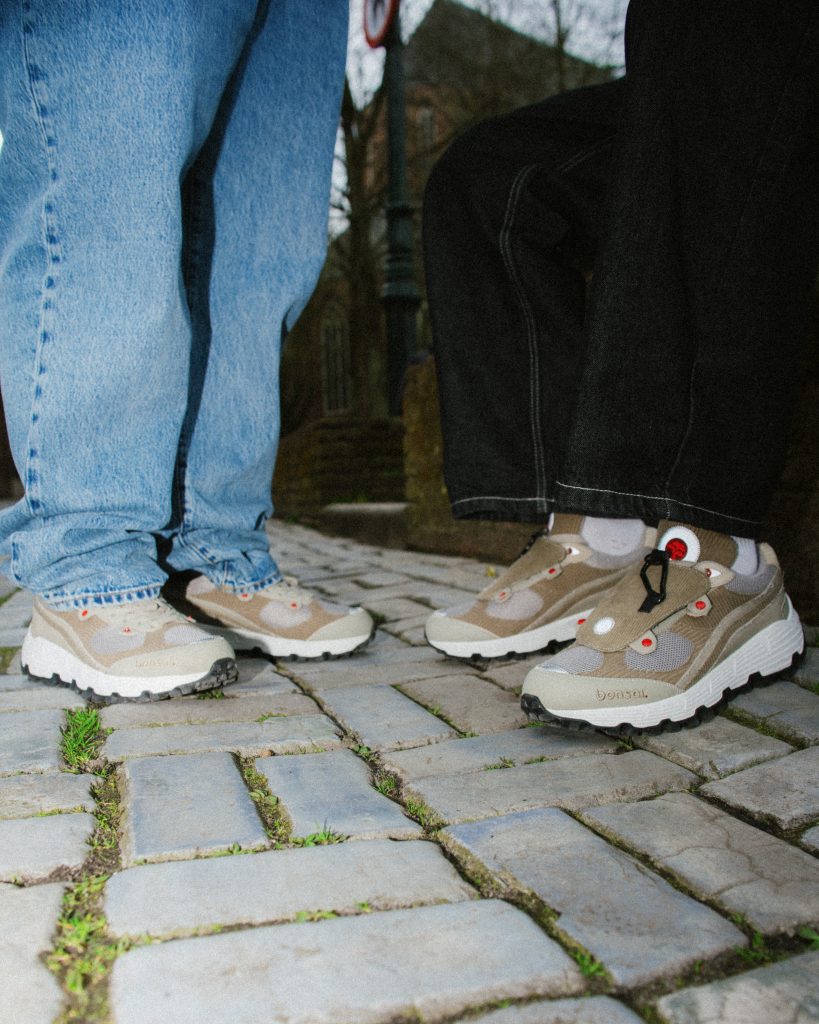
Can you tell us more about Bonsai?
The name Bonsai comes from the idea that a bonsai tree grows slowly and constantly needs to be shaped and maintained. That felt like a beautiful comparison to this project. The seed for this dream was planted a long time ago, but the actual process took years and had to be continually refined and “pruned” along the way.
I started designing this sneaker in 2022. I had always loved the grey colour palettes of New Balance models such as the 990v3, but in my eyes they sometimes lacked that extra “pop”. That’s why I chose red details as a nod to Bud, who made it possible for this dream to become reality.
For the different layers along the sides, I was mainly inspired by the Air Max 95. I think the structure of that shoe is incredibly strong. I’m also a huge fan of details and materials. When the colour palette remains understated, materials have the opportunity to really tell the story of a sneaker. That means a sneaker can appear fairly monochrome in terms of colour, while still feeling very expressive because of the materials used.

Why did you specifically choose this colourway and add the rain protector?
My goal was to design a sneaker that would appeal to a wide range of people. That’s why I opted for a fairly understated and wearable colourway, where the materials and textures make the real difference.
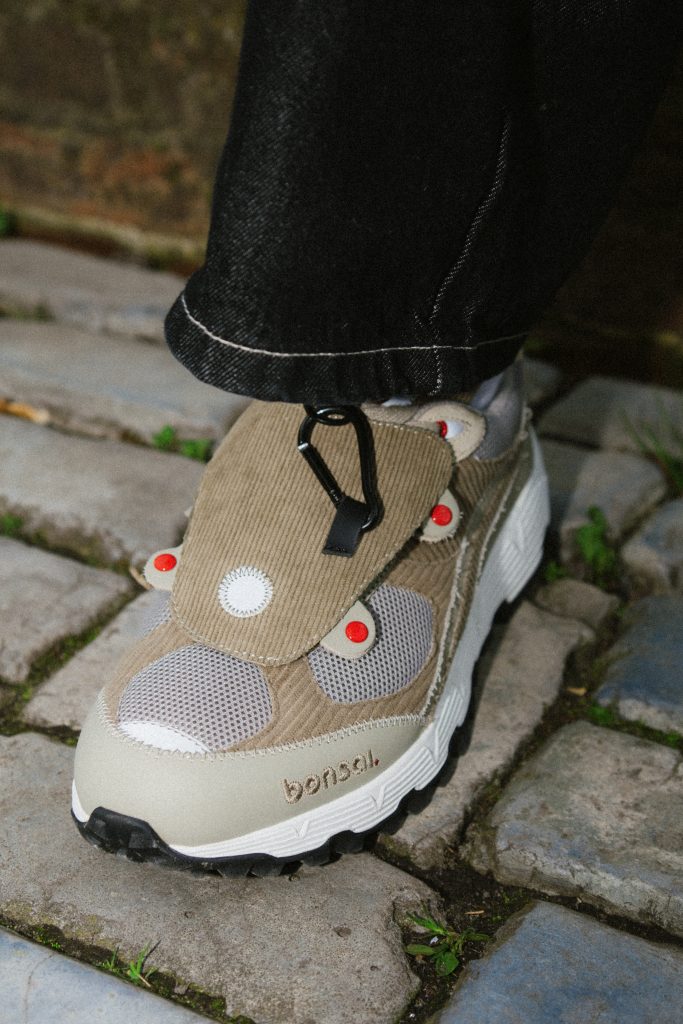
The rain protector actually serves two purposes. On the one hand, it protects your laces and feet from rain and dirt, but it also makes the sneaker visually more distinctive. Without the protector, the shoe looks quite clean and minimalist, whereas the protector adds extra character and creates more of a fashion statement.
Did your background as a sneaker collector/enthusiast play a role in the design process?
Absolutely. I think designing your own sneaker is a dream for many sneaker enthusiasts. Since secondary school, I’ve been interested in sneakers, especially the stories and influences behind certain designs. I always found it fascinating to see what a designer was trying to communicate through a model.
Now that I’ve been part of such a process myself, I’ve realised just how complex it actually is. There’s so much more involved than simply designing the exterior.
As a small side note: I’m personally quite critical when it comes to sneaker design. Quite often I’ll hold a new release in my hands and think about what could have been done slightly differently to make the shoe even stronger. At the same time, I fully realise that taste will always remain personal.
What roles did Sneaker Salon and VIJZ Bespokes play in the design process?
From sketch to final product, it’s genuinely been a long journey. The entire process began during the Covid period. Because I temporarily couldn’t work as a DJ at the time, I spent a lot of time at home, which gave me the opportunity to fully immerse myself in design and creative processes.
In 2022, I began developing the sneaker. Through VIJZ, I became increasingly involved in the process and gained more insight into everything required to fully design your own sneaker. The first step was choosing a midsole. For me, it had to be comfortable while also having a distinctive appearance.
After that, we started working on the upper of the shoe. During that phase, the focus was mainly on patterns, shapes and material choices. Several samples were then produced, with colours and materials being repeatedly adjusted and refined. That’s when I realised how much impact small changes can have on the appearance of a sneaker. Step by step, the design evolved closer to the final result.
Throughout the entire process, Sneaker Salon played a major role by providing feedback and helping further develop the project. They actively contributed ideas regarding the design, the direction of the shoe and eventually the release as well. VIJZ Bespokes had more of an advisory role on both the technical and creative sides, helping to make ideas achievable while critically assessing details, materials and comfort.

What was the most difficult part of translating your vision into a physical sneaker?
In your mind, everything initially feels possible. You have a very clear image of what the sneaker should look like and the feeling it should convey. But during the process, you quickly realise that translating that exactly into a physical product is far more complex. You have to deal with certain design structures, technical limitations and, of course, comfort.
For me, it was important that the sneaker not only looked strong, but was also genuinely comfortable to wear. That’s why the entire process started with choosing the right midsole. That immediately formed the foundation of the shoe. Only after that could we continue building the upper, materials and details. Finding the balance between design, wearability and technical feasibility was sometimes challenging, but also very interesting.

Which details in the sneaker are personally the most important to you?
I’m someone who naturally pays a lot of attention to detail. For me, the overall picture of a sneaker has to feel right. That’s partly why the final samples only changed minimally in the end, at a certain point, everything simply felt balanced.
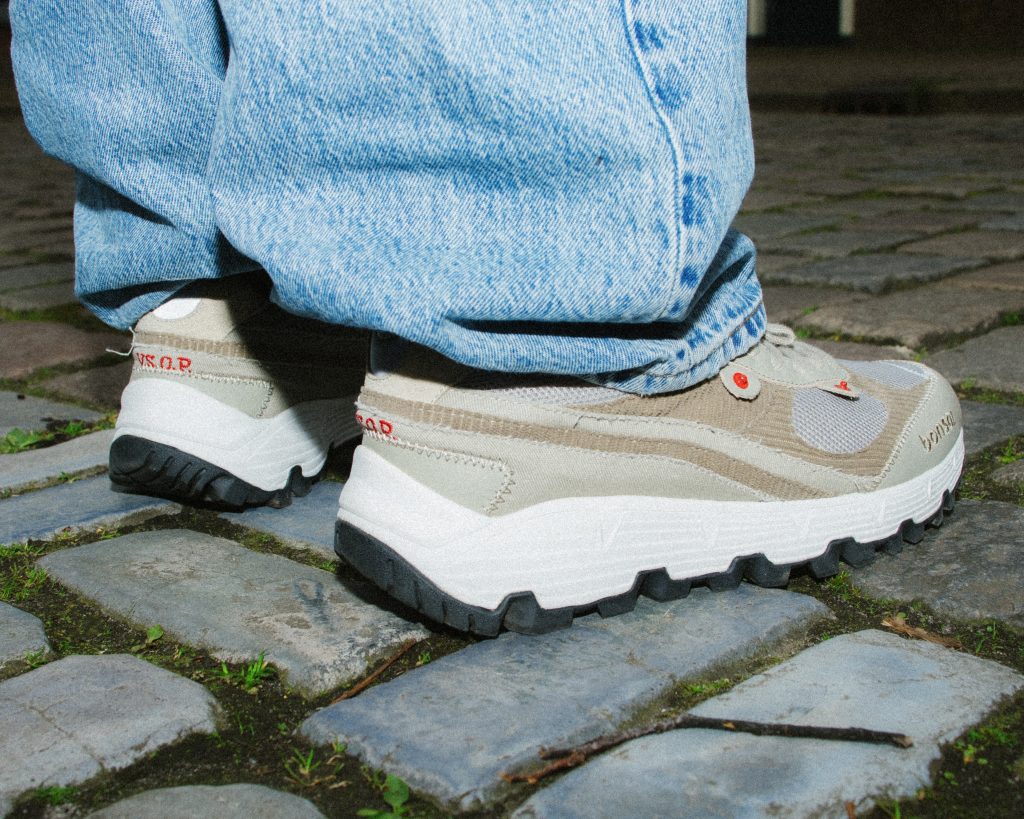
There are also several personal details incorporated into the sneaker. For example, the text “V.S.O.P.” appears on the back, which in this case stands for Very Special Operation Project. The insole also contains an ingredient list with the “contents” of the product as a creative nod to packaging and product design. In addition, the Bonsai logo is placed on the tongue behind a small glass panel. Subtle details like these make the sneaker feel personal to me and give the design extra character.
What absolutely had to be different about the Bonsai compared to everything that already exists from other brands?
For me, accessibility was central. I think it’s important that people who genuinely love this sneaker actually have the opportunity to buy it, provided stock allows, of course. That’s why we consciously chose a retail price of €120 per pair. In my opinion, that’s a strong price for a handmade sneaker.
Beyond that, I mainly wanted to create a product driven by “love for the game” rather than hype. It was meant to be a tribute to sneaker culture, but from my own perspective. Not a design created purely to stand out or sell out quickly, but something made with genuine attention, passion and storytelling behind it.
Were there any ideas that were too “wild” to release?
That’s actually quite a difficult question because I was given a lot of creative freedom during the design process. However, the first samples were quite different from the final result. For example, instead of red details, they featured green accents as a nod to the colours of Groningen.
Eventually, I moved away from that because I wanted the sneaker to have broader appeal. I didn’t want it to become a shoe that was only understood locally or regionally, but rather a design that different people could connect with. By keeping it a bit more subtle and accessible, the final result ultimately became much stronger.

What does finally bringing your own sneaker to market mean to you?
For me, this has mainly been an incredibly special and educational process. Not only was I able to design my own sneaker, but I also learned an enormous amount about materials, comfort, production and everything involved in creating a genuinely good sneaker.
It also means a lot to me to contribute something to the sneaker culture that I’ve personally been part of for many years. As an enthusiast, you spend years watching other people’s releases, so the moment you finally hold your own physical design in your hands feels surreal.
Perhaps the most beautiful part is knowing that people will soon actually be wearing a sneaker that contains years of ideas, details and personal choices. That makes it far more than just a product to me.


