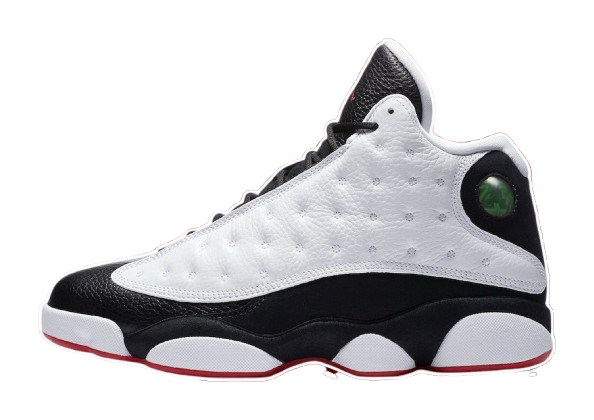
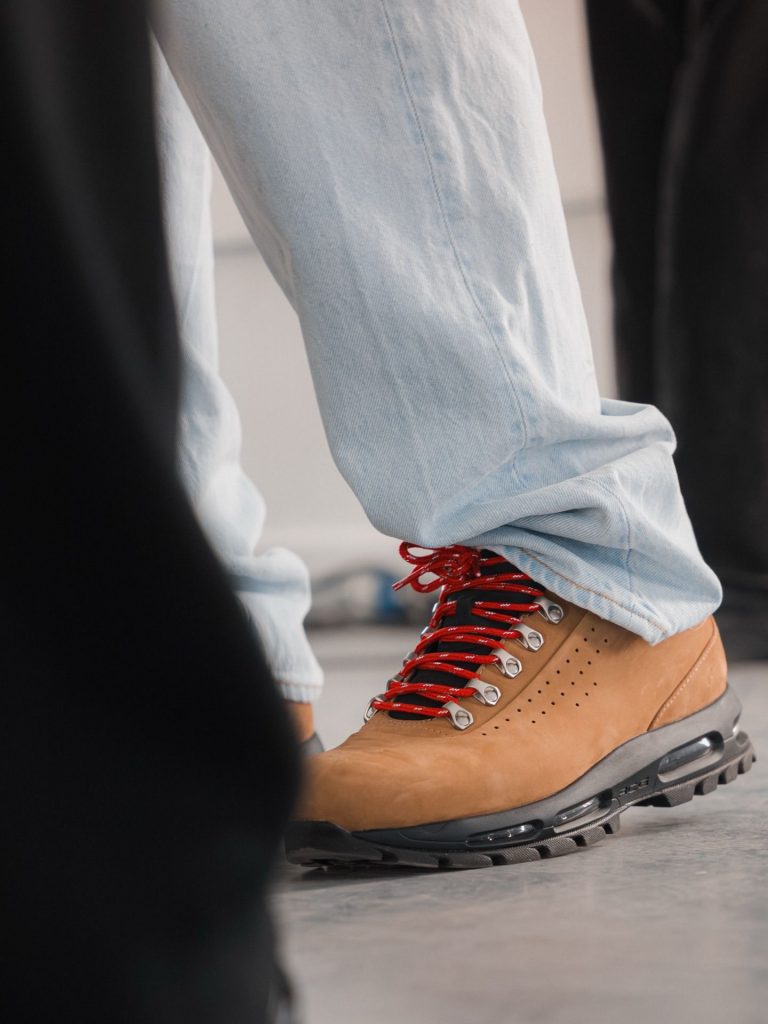
“HARDWEAR by Goadome” was a daring, immersive event by Nike (and SNKRS), celebrating the launch of the Nike Air Max Goadome Low, a sleek, a low-cut of the classic Nike boot. Originally introduced in the early 2000s as part of Nike ACG, the high-top Goadome quickly became a cult favourite, especially in the American East Coast street and club scenes (think DC/Baltimore and go-go culture). Its durable, workwear-inspired design (often likened to other fashion adopted boots) earned it a devoted following, with recent revivals sparking massive demand for pony hair and cow-print versions in 2025. The new Low version refines the formula: it streamlines the upper for a more versatile, street-ready appeal while preserving the signature chunky Air-cushioned midsole, metal hardware, and grippy outsole.
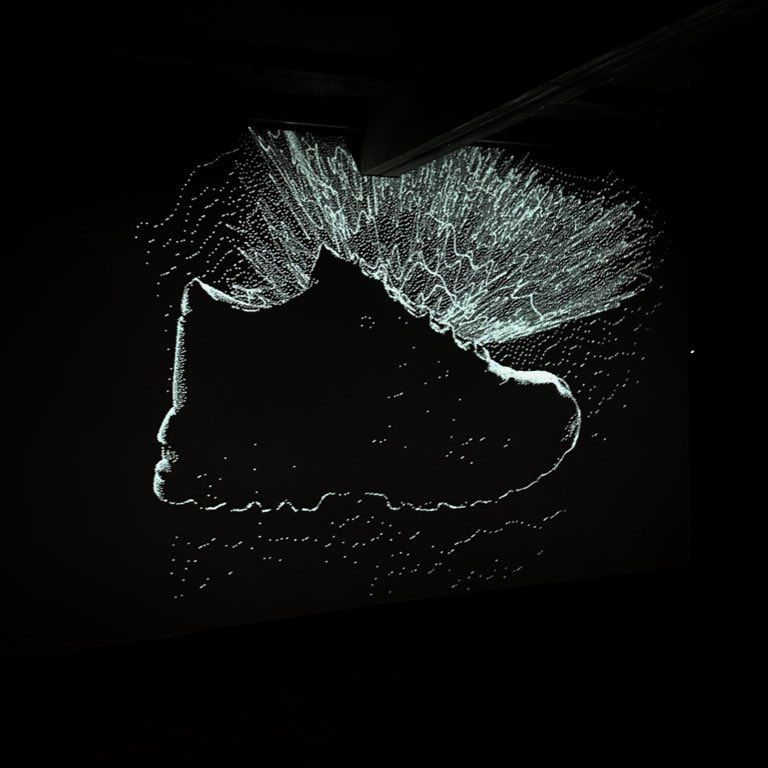
The event was developed by MØRNING (@morning.fyi), who led the concept, creative direction and strategy. They reimagined the Goadome as a “living system,” blending Y2K nostalgia with futurism. The experience channelled the city’s underground energy through a brutalist-inspired format, shifting from a daytime pop-up with Goodhood to a full sensory nighttime takeover of sound, installations and performance, an exploration of London subcultures through the lens of the Goadome.
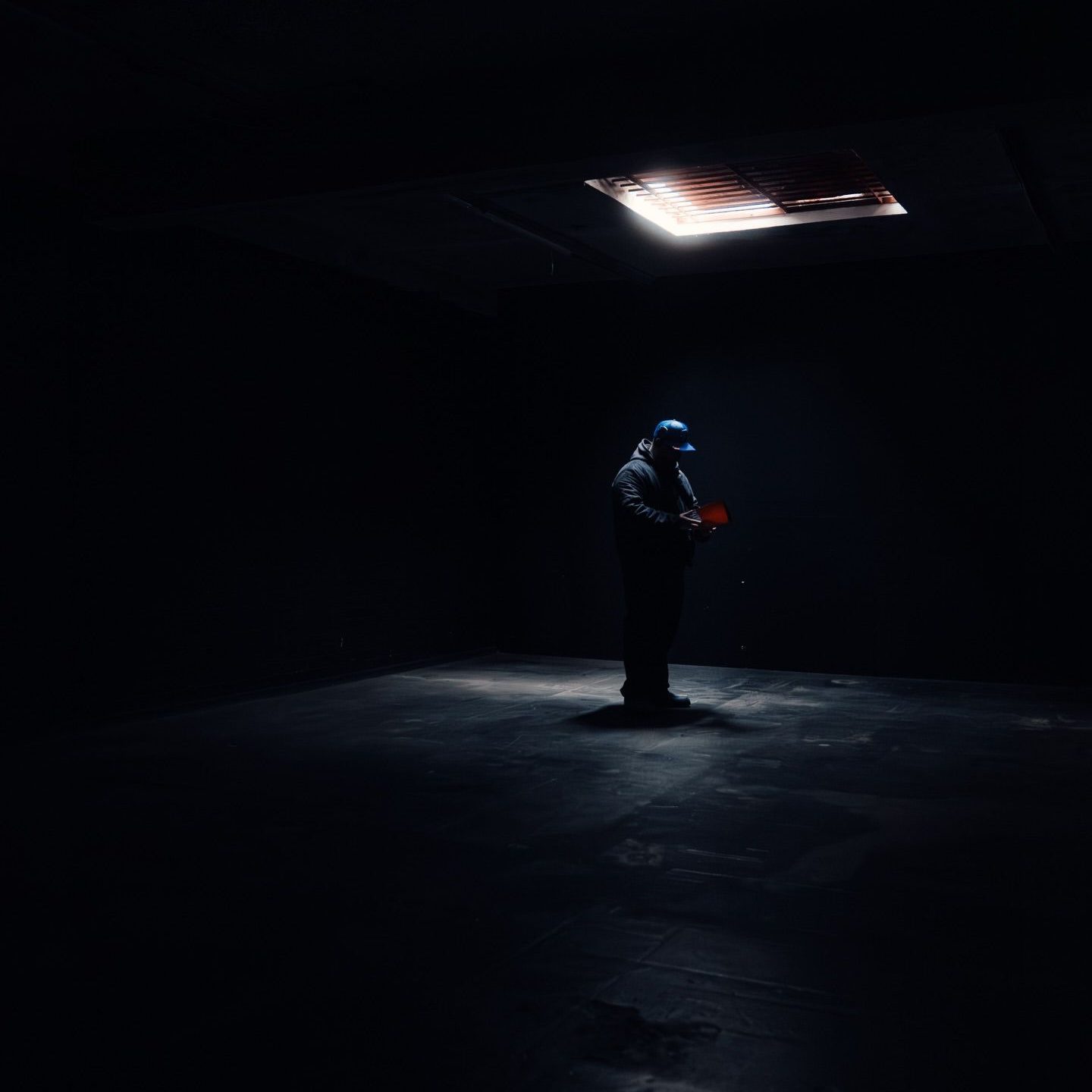
The event’s immersive installations, visual displays, and performances featured a lineup of London-based and international underground artists, designers, and creators. Their works reinterpreted the Goadome’s gritty heritage through themes of nostalgia, perception, diaspora, materiality and intimacy. This roster amplified the event’s goal: turning the Nike Air Max Goadome Low into a cultural bridge, bringing in a wide range of people, communities and conversation. Its classic ACG heritage meets experimental underground expression. Making it one of Nike’s most conceptually rich activations in recent years.
We spoke with some of the people involved to understand how it came together and what the process looked like behind the scenes. Their involvement went beyond simply executing an idea, it was about shaping the direction, refining the details, and bringing a shared vision to life through collaboration. Each contributor played a key role in translating the concept into reality, from early conversations and creative development to production, curation, and final execution. Through these insights, it becomes clear how the project evolved organically, guided with intention, experimentation, and close partnership between everyone involved.
Rohani – Creative Director
First up we caught up with Rohani to dive deeper into the thinking behind the project, from the original spark of the idea to the creative decisions that shaped its execution. As Creative Director, Rohani played the central role in defining the concept, steering the strategic direction, and ensuring the visual and experiential language stayed aligned with the broader vision.
1. “HARDWEAR” felt less like a product launch and more like a cultural exhibition. At what point did you decide this couldn’t be a traditional retail-first activation?
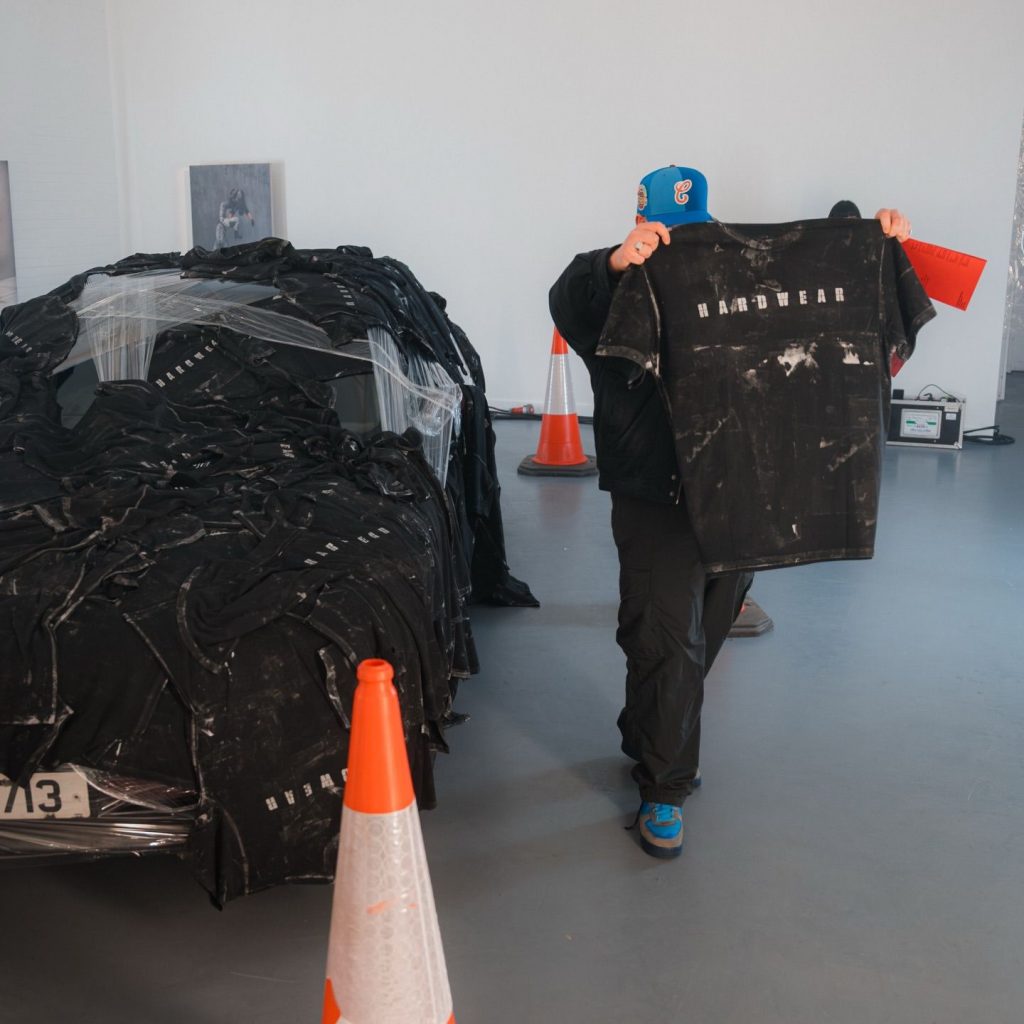
We had a silhouette with a nuanced cultural legacy – legendary in cities like DC and Baltimore but comparatively unknown in London. With this in mind, we saw an opportunity to speculate on the Goadome’s place within UK culture today. From the genesis of this project, we were more interested in dissecting the shoe from a literal, material, cultural and abstract perspective, to bridge a narrative between past, present and future, between North America and the UK. We focused on artists who aren’t necessarily making art within the art world or music within fixed genres. HARDWEAR was a way for us to create a new context, and expose people to names, works and mediums they might not already be familiar with. That was a priority for us.
2. The Nike Air Max Goadome Low carries a legacy that isnt familiar to the UK. What responsibility did you feel in translating a silhouette so rooted in workwear and East Coast culture into a London context?
The history of the shoe has already been written and we wanted to pay respect to that. Working with an archivist to source physical items and original models was a critical contextualiser for the space – it enabled us to frame the culture that cemented the shoe at that time, and what parallels there were in the UK from that same era. We also needed to honour the musical origins, commissioning a film by director @beingspikegonzo which featured original sound design inspired by Goa Trance (the genre the shoe is named after).
3. Why was “HARDWEAR” the right framing? What does that word mean beyond materials and metal eyelets?
HARDWEAR is about contradiction and belonging. Inspired by the duality of The Goadome – an outdoor silhouette made for the city – we looked at the inherent tensions of London’s cultural reality: chaos, curation, DIY, premium, grit, polish. To live and create here, as in most cities, you have to navigate these oppositions. HARDWEAR comes from the uniforms we wear, the return to physical tech, and the protective objects and items we enmesh with, both physically and symbolically, as we move through these spaces and signal our belonging. Our curation centred on emergent names, material explorations and unusual formats – a collection of items with a defining point of view on HARDWEAR.
4.. The event was immersive, almost confrontational at points. How important was sensory to the telling of this story?
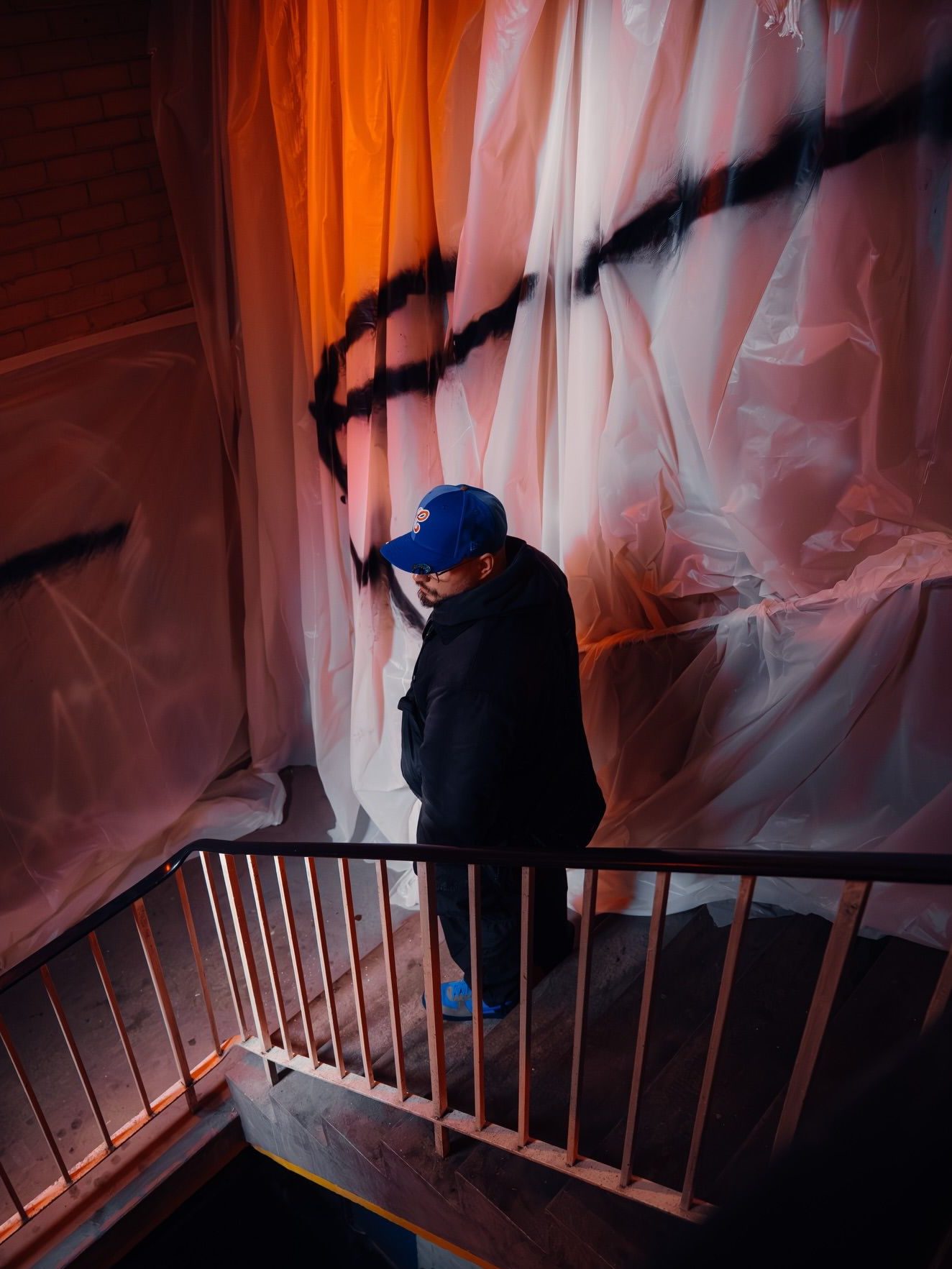
The sensory element came from our intention to bring people into their bodies, the moment and the space. From the brutalist sensory assault of the film screened in the first room, to the haze and spatial design of the exhibition spaces, the artists and works we featured deserved real contemplation, so we worked with an incredible set designer @mickoconn to create an experience that testified to this.
5. How do you measure success on an activation that isn’t about purely about sell-through or SNKRS traffic.
It’s about memory and curiosity. Did we show people something new? Did we create access points for the audience to connect with artists they might not already know? Will they remember the experience? Did we give them new creative references and inspiration? Did we spark new ideas and perspectives of seeing? Did we offer a real point of view that was built from the history of the shoe? Those are the questions we asked ourselves throughout the process.
No Licence Archive
We also spoke with Felix Dean to understand his perspective and contribution to the project, exploring how his creative lens shaped key moments from concept through to execution. Through his work, Felix brought a distinct energy that aligned with the broader vision. A homage to London’s Y2K grime scene, No Licence Archive is the brainchild of Felix Dean, rooted in his personal experiences and upbringing, emerged organically as a way to preserve a pivotal era in the city’s history. Hidden in Peckham within a reworked car park at Peckham Levels, capturing the raw spirit of early 2000s London. Coming from archival roots and a background in collecting and reselling, Felix has built one of the first dedicated archives centred around early grime culture, creating a space that documents, celebrates and safeguards its legacy.
1. No Licence is rooted in documenting material culture, not just music, but clothing, accessories, ephemera. Why is archiving fashion so critical to understanding grime properly?
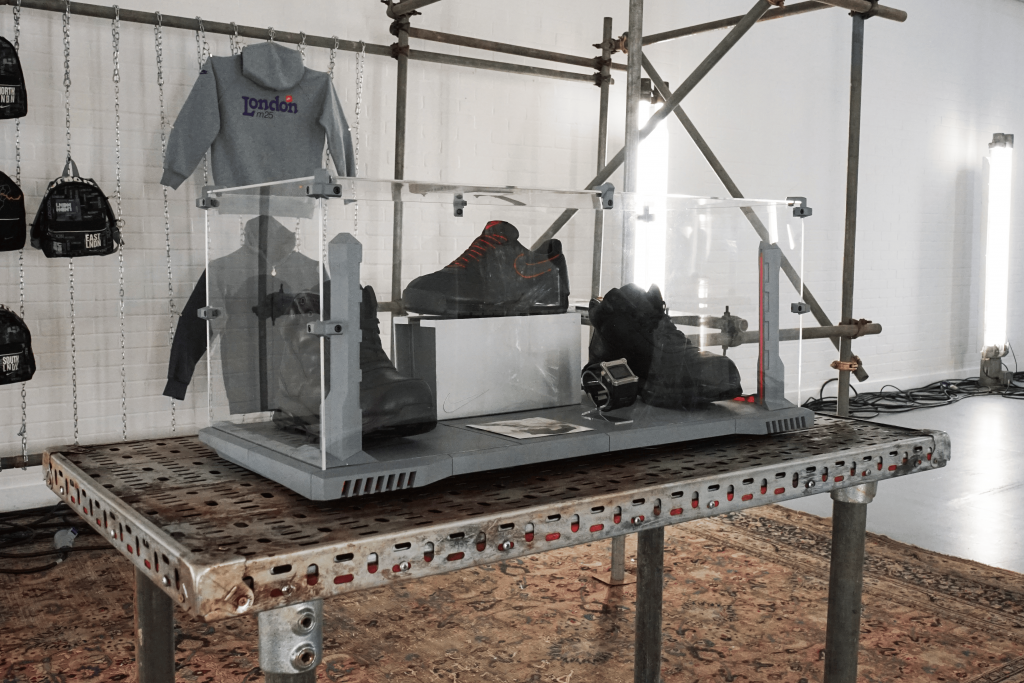
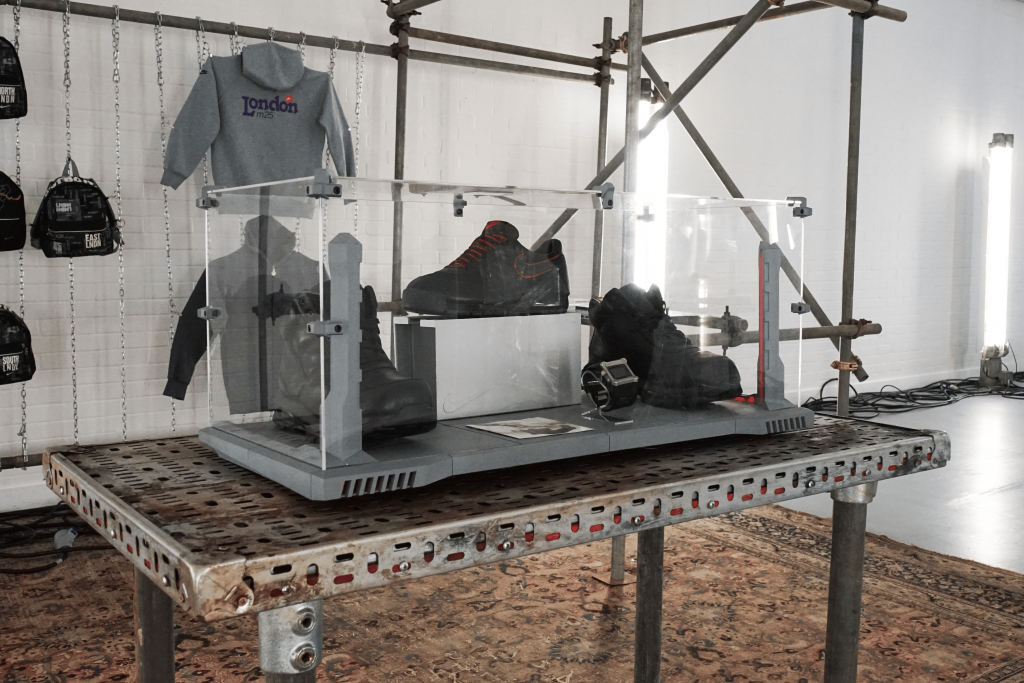
Documenting the clothing worn during the emergence of Grime music speaks critically on where London was culturally at the time. Postcodes were pivotal, affiliation with those closest to you was essential and doing something unique really made you stand out. Highlighted with our display of the early 00s Nike Just Do It Rucksacks emblazoned with the varying ends of London. Only available at select stores in the areas.
2. The Goadome Low is being positioned as a bridge between Y2K nostalgia and futurism. In your view, is grime currently in a similar phase, being revisited, reinterpreted and repackaged for a modern audience?
Simply, yes. You have the OGs who are still making incredible music, and the new wave of younger artists who look back on grime as a nostalgic movement pulling from the origins and creating their own sounds.
3. Pirate radio era grime had a DIY, functional aesthetic, tracksuits, workwear, durable footwear. How important was practicality versus style in shaping that look?
Personally practicality always trumps style. Humans live to inhabit the streets, not the catwalk or the red carpet. And this was very much the case for the pioneering grime artists. There wasn’t anything fancy about the movement.
4. Nike revisiting the Goadome feels like a return to a cult artefact rather than a mainstream retro. From your perspective, what separates a meaningful revival from a hollow nostalgia play?
A meaningful revival pulls from the archive, where cultural significance is evident & positions it with reason to keep evolving. The Goadome or the Nike Boot as it was colloquially referred to had a major impact within the US Hip Hop scene, being championed by the likes of Wale, Big Boi, Jim Jones and the whole Dipset camp. Pioneering artists, and no one can deny that US Hip Hop has had and still does influence the UK scenes.
5. Grime fashion was born from environment, council estates, youth clubs, pirate radio towers. How can a brand activation like “HARDWEAR” channel that energy without sanitising it?
“HARDWEAR” really focused on creating an experience for the visitors utilising artists you may not have heard of before each responding to the brief in their own unique way. I don’t think change can happen if new creators aren’t given platforms to showcase their talents. It felt very gritty, London centric, raw & genuine.
Spike Gonzo – Director
Finally we have Spike Gonzo is part of a new generation of directors who understand culture from the inside out. His work doesn’t feel manufactured for brands, it’s embedded in the communities brands are trying to reach. There’s a rawness to Spike’s direction. A looseness. The camera often feels present rather than positioned. Whether he’s working across music, fashion or youth-led storytelling, there’s an instinctive understanding of pace, energy and atmosphere. Nothing feels over-polished. Nothing feels forced. What makes his approach resonate is his authenticity. He captures people as they are, not as they’re supposed to be. That’s a subtle but important difference. In an era where campaigns feel more and more algorithmically assembled, Spike’s work carries texture. Grain. Personality.
1. Your work sits at the intersection of image and sound, distortion, strobe, tension. How did HARDWEAR’s concept of “sensory assault” align with your visual language?
It aligned very naturally. My core visual language could already be described as a form of “sensory assault.” I like to move back and forth between violent, distorted, chaotic, almost indecipherable visual and sonic atmospheres, and then switch, within a second, to something extremely calm and composed. That sudden shift carries the audience between two radically different emotional states in half a second. I think this visual language allows me to trigger intense emotional peaks and comedowns, creating that feeling of sensory assault.
2. Do you see footwear launches as being an art spaces, or did this event feel like something different to the norm?
I do see footwear launches as potential art spaces but this event felt especially intentional in that direction. There were many artists involved, each reinterpreting the Nike Goadome in their own way, creating a bridge between their individual practices and what the shoe represents in its cultural legacy. It wasn’t just about presenting a product, it was about opening up a dialogue between the object and different artistic languages.
That multiplicity of perspectives made it feel less like a traditional launch and more like a collective artistic statement built around a shared symbol.
3. The Goadome is being reframed as a cultural artefact. What makes an object transcend product status and become symbolic?
It’s very clearly about cultural legacy. I feel that wearing this shoe, for example, means carrying the culture it helped shape, even though it originally began as an accessory.
When an accessory offers more than just style, when it connects the person wearing it to a specific culture, history, or community, that’s when it transcends product status and becomes a symbolic object.
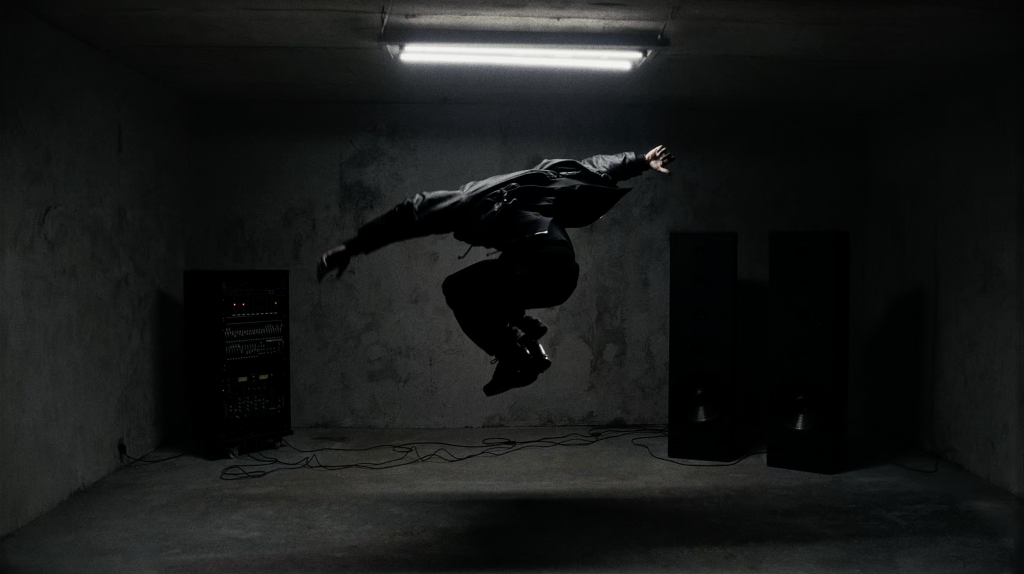
4. How do you translate something as tactile as a boot, leather, metal hardware into light and projection?
By trying to concretely understand what the boot represents. In my video, I explore identity and the shoe as a symbol, the connection between this artefact and the person who wears it.
As the wearer assimilates it, the boot stops being just an object and becomes part of their narrative. It turns into the artefact of the character’s journey, shaped by movement, experience, and intention. That’s how I translate something tactile like leather and metal into light and projection: by focusing not only on its materiality, but on the meaning it carries and the transformation it undergoes through the person who inhabits it.
Conclusion
“HARDWEAR by Goadome” stands as a bold departure from the conventional sneaker launch, proving that Nike can still surprise and elevate when it leans into genuine cultural depth rather than surface-level hype. By recontextualizing the Nike Air Max Goadome Low as a living system bridging heritage influences, Y2K nostalgia, and London’s layered underground present, the event created something far more enduring than the drop. Partnering with an established retailer Goodhood and transforming the space into an exhibition of material culture featuring unconventional artists turned the launch into a thoughtful exploration of duality: grit versus polish, past versus future, function versus expression.
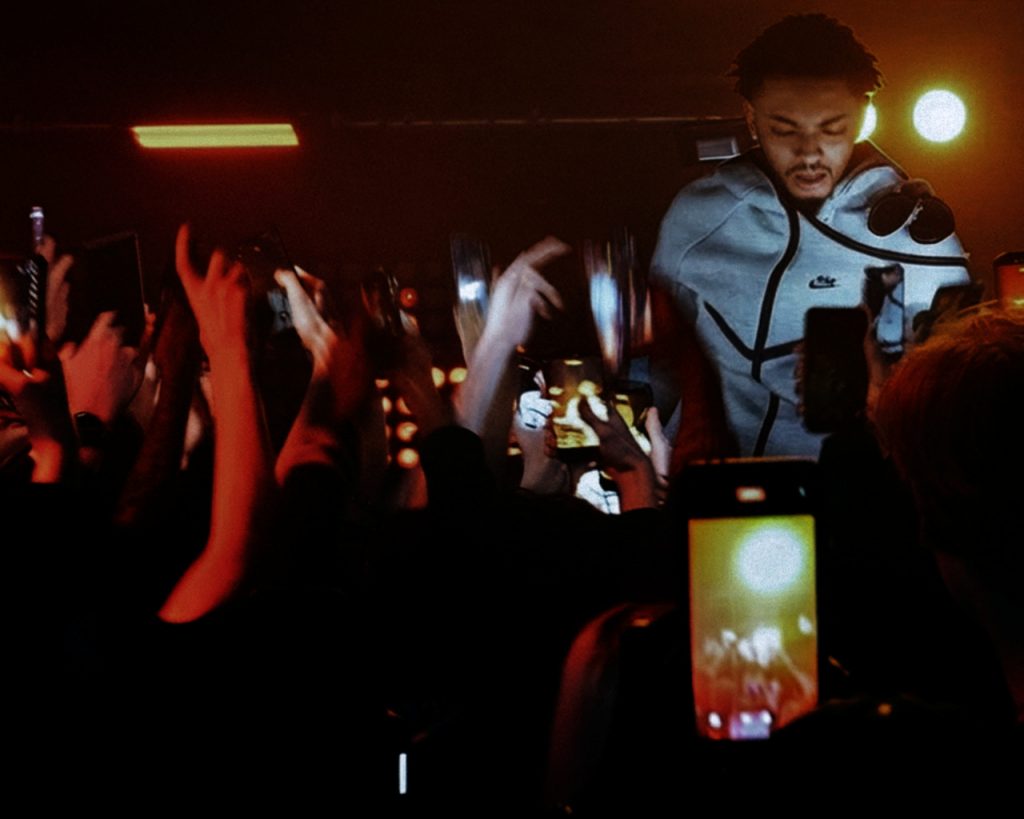
Through a thoughtfully curated roster of emergent talents, the project prioritised curiosity and new perspectives, introducing unfamiliar names, sparking inspiration, and honouring the silhouette’s rugged ACG roots while propelling it forward. In an era where many brand activations chase scarcity and traffic, “HARDWEAR” reminds us that the most powerful cultural statements come from substance: immersive storytelling, respectful heritage engagement, and intentional experiences that linger long after the event ends. This wasn’t a launch; it was a cultural bridge, positioning Nike, Air Max, ACG, and SNKRS as symbols of evolving subcultural futures. Nike’s willingness to embrace this level of conceptual risk signals a refreshing maturity, setting a high bar for what sneaker culture activations can and should aspire to be. I just hope this wasn’t a fleeting moment.
FULL CREDITS
Project
- HARDWEAR by Goadome
- Powered by SNKRS
- Agency: EVENING – https://www.instagram.com/evening.fyi / MØRNING – https://www.instagram.com/morning.fyi
- Photographer: Faiz-Ouacime Kabouche – https://www.instagram.com/faizouacime
Creative Team
- Creative Director: Rohani Coombes – https://www.instagram.com/rohanicoombes
- Creative Lead: Maude Churchill – https://www.instagram.com/maudechurchill
- Design Lead: Min Kim – https://www.instagram.com/mintothek
- Strategist & Creative: Alisha Brocklebank – https://www.instagram.com/trinket.stealer
- Senior Strategist: Ede Dugdale – https://www.instagram.com/ededugdale
- Head of Production: Chynna Richardson – https://www.instagram.com/chynnasimone
- Senior Project Manager & Producer: Thomas Minnock – https://www.instagram.com/thomasminnock
- Event Producer: Bonner Kaler – https://www.instagram.com/bonnerkaler
- Creative Ops Lead: Roxanna McGlew – https://www.instagram.com/mcroxana
- Project Manager: Chloe Hague – https://www.instagram.com/chloehague__
- Set Design: Mick O’Connell – https://www.instagram.com/mickoconn
- Web Design & Development: Array – https://arrayassoc.com / https://www.instagram.com/arrayassoc
Exhibition Artists
- Brennan Wojtyła – https://www.instagram.com/wojtyl.a
- Mattia Guarnera – https://www.instagram.com/mattia.guarnera
- Fredwave – https://www.instagram.com/fredwave_
- Parkland – https://www.instagram.com/parkland888
- Spike Gonzo – https://www.instagram.com/beingspikegonzo
- Black Atlantic – https://www.instagram.com/newblackatlantic
- Nicole Greenwood – https://www.instagram.com/nicolenotyetrichie
- Jack Dempsey – https://www.instagram.com/fo.a.m
- Yuming Lu – https://www.instagram.com/970ml
- Mourah Soukar – https://www.instagram.com/mourahhhh
- Nathan Wright – https://www.instagram.com/nathanw_____
- No Licence – https://www.instagram.com/nolicencearchive
- George Edwards – https://www.instagram.com/georgesedwards
Music Artists
GTE – https://www.instagram.com/leahgte
SINN6R – https://www.instagram.com/sinn6rkilla
Young Eman – https://www.instagram.com/itsyoungeman
Teebo – https://www.instagram.com/teebofg
Antagonists – https://www.instagram.com/antagonistsuk
Dopesolitary – https://www.instagram.com/dopesolitary
Kare – https://www.instagram.com/karetorical
Cppo – https://www.instagram.com/6cppo